Quantum Computing in the Global Energy Landscape
- year:
- Jan-Apr 2026
- place:
- Wood Mackenzie × Columbia SIPA
- kind:
- SIPA Capstone · Team of six
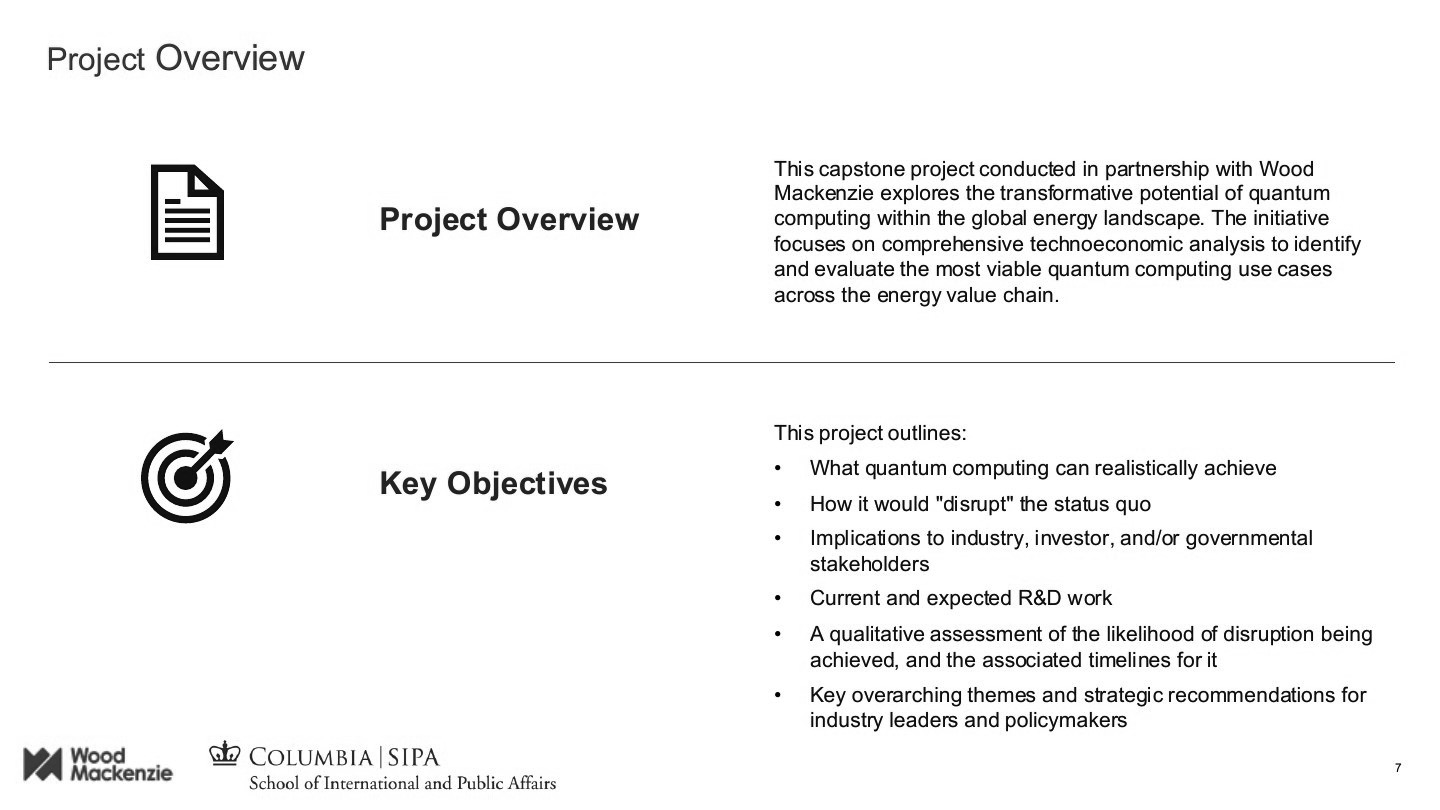
For four months, our six-person Columbia SIPA Capstone team worked with Wood Mackenzie on a practical question: where might quantum technologies actually matter to the energy industry, and how long would that take? We presented the work in New York in April 2026.
This page covers the question, the framework, and the conclusions that public sources can support. The final presentation is included below, with email addresses removed. Interview notes and other unpublished team materials remain private.
My part
I worked on the Monte Carlo explainer, the energy-finance application, and the synthesis of our application matrix. The full report belonged to the team. My part sat at the hinge between a technical claim and an economic one: what a proposed speedup changes for an energy user, when that change begins to matter, and whether the gain can justify the cost of implementation.
The framework
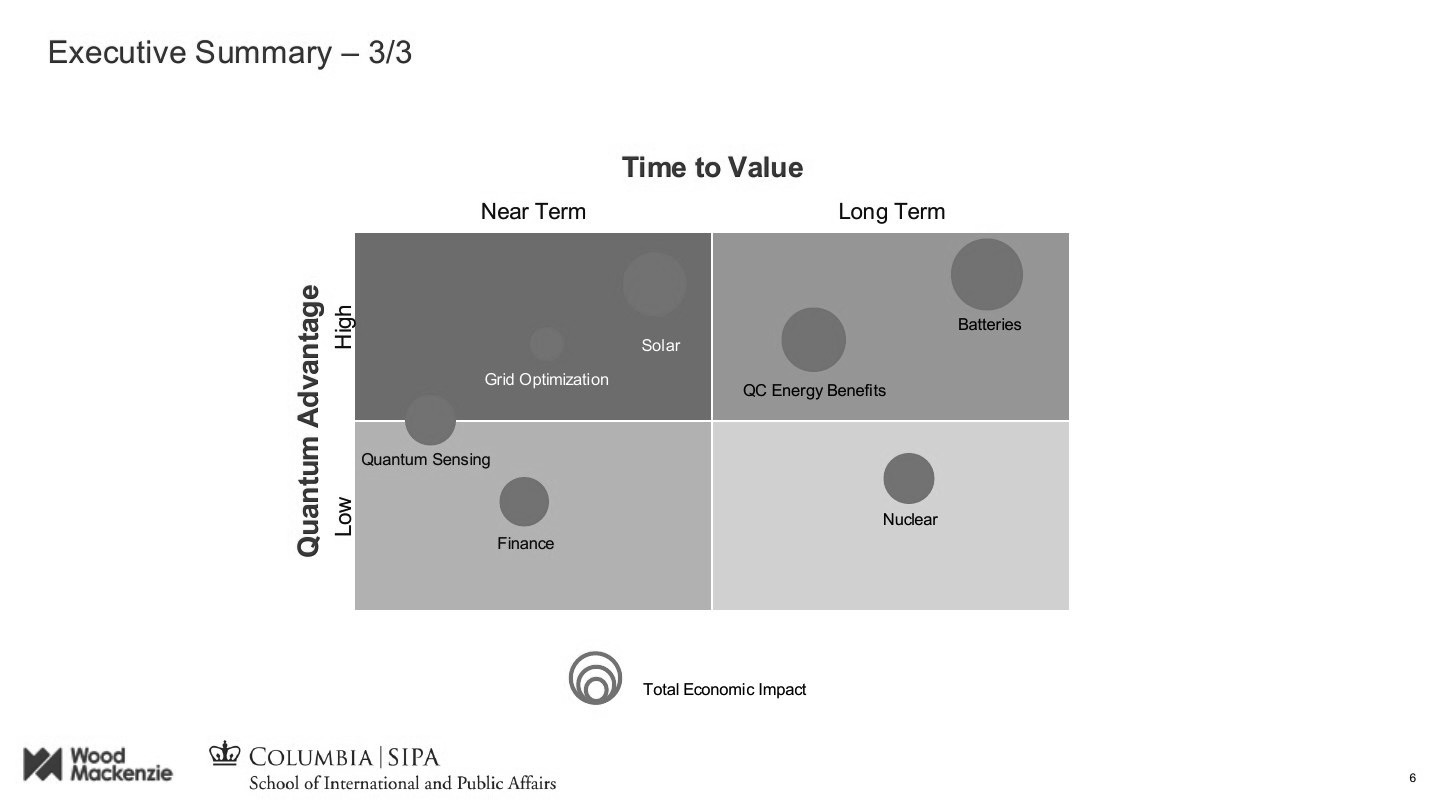
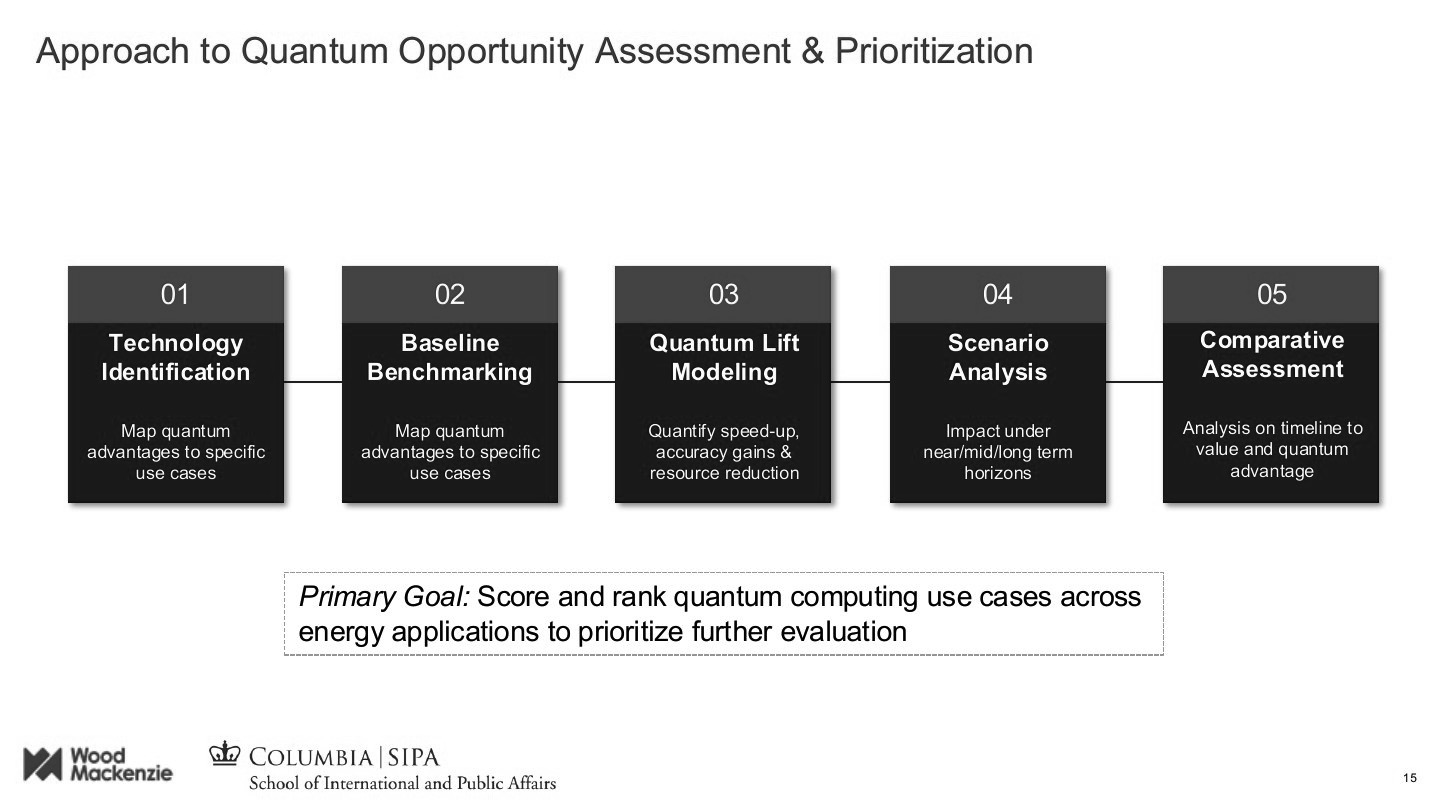
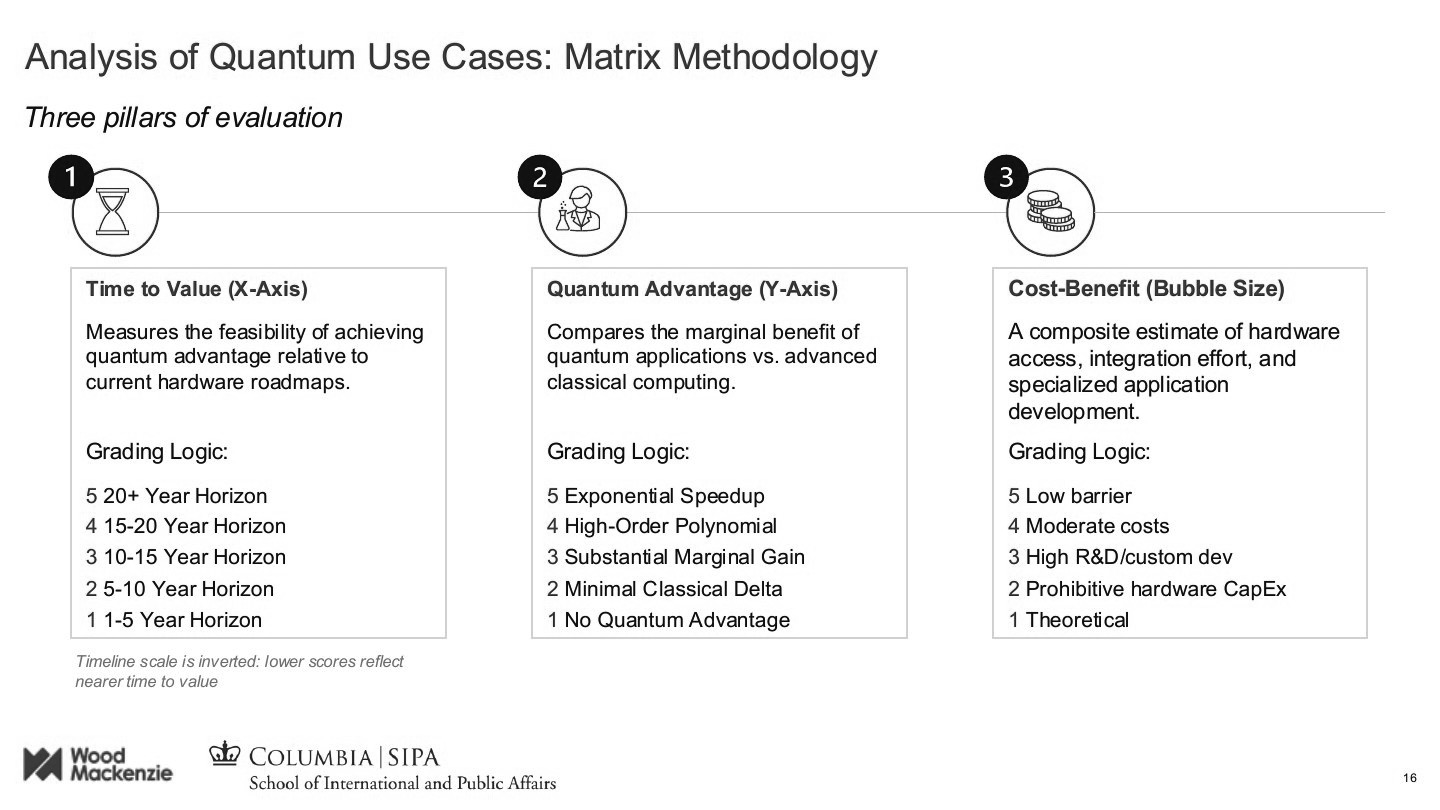
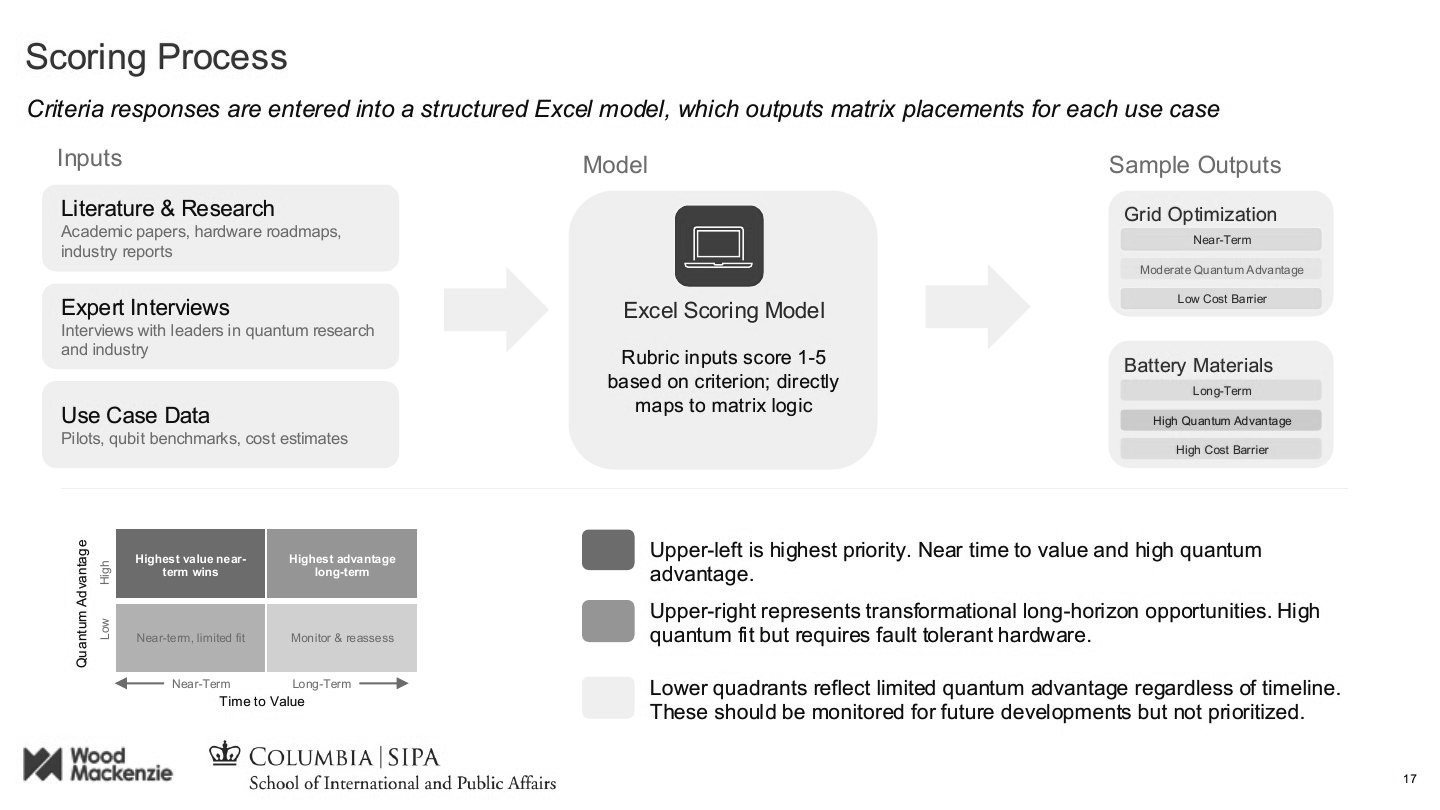
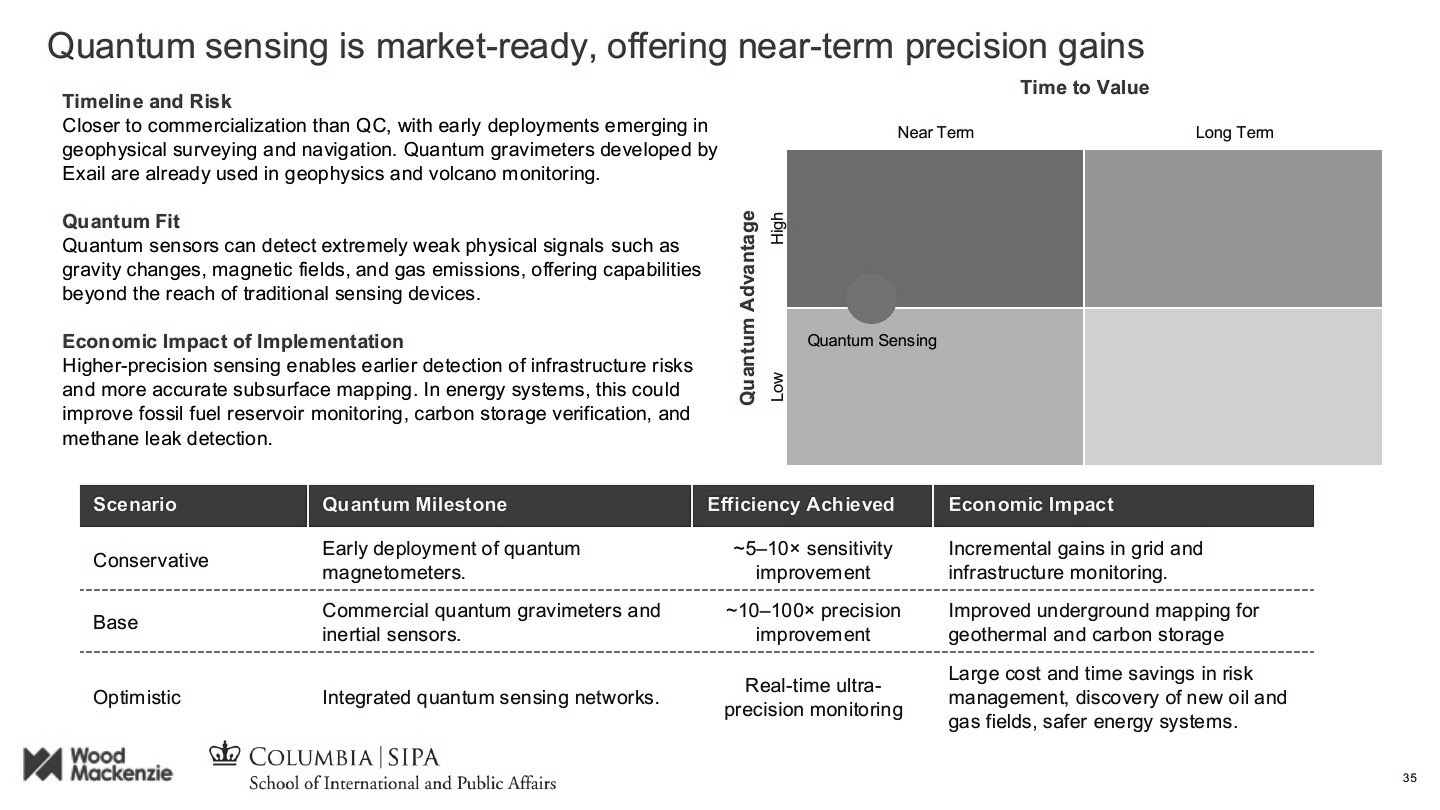
We compared candidate applications across three dimensions:
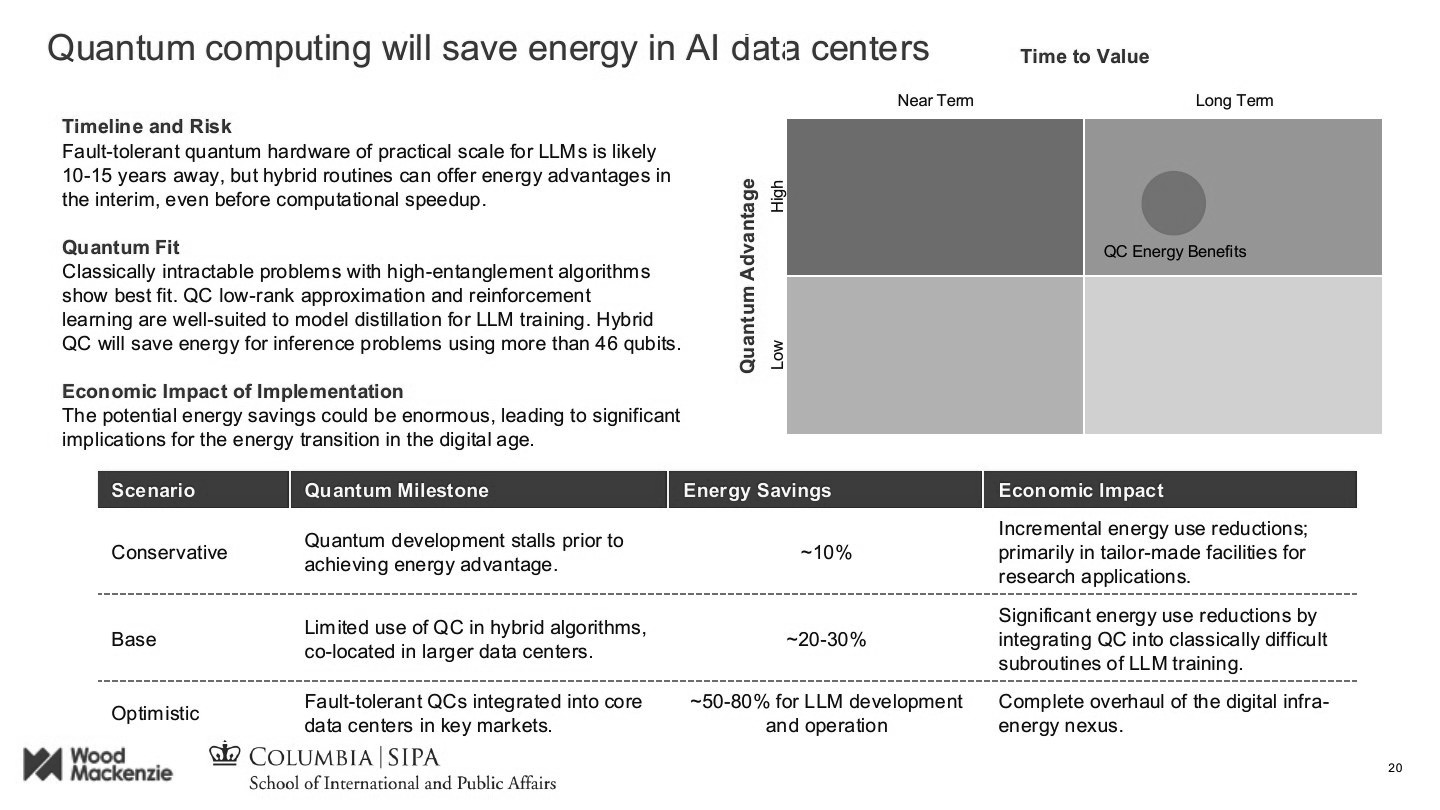
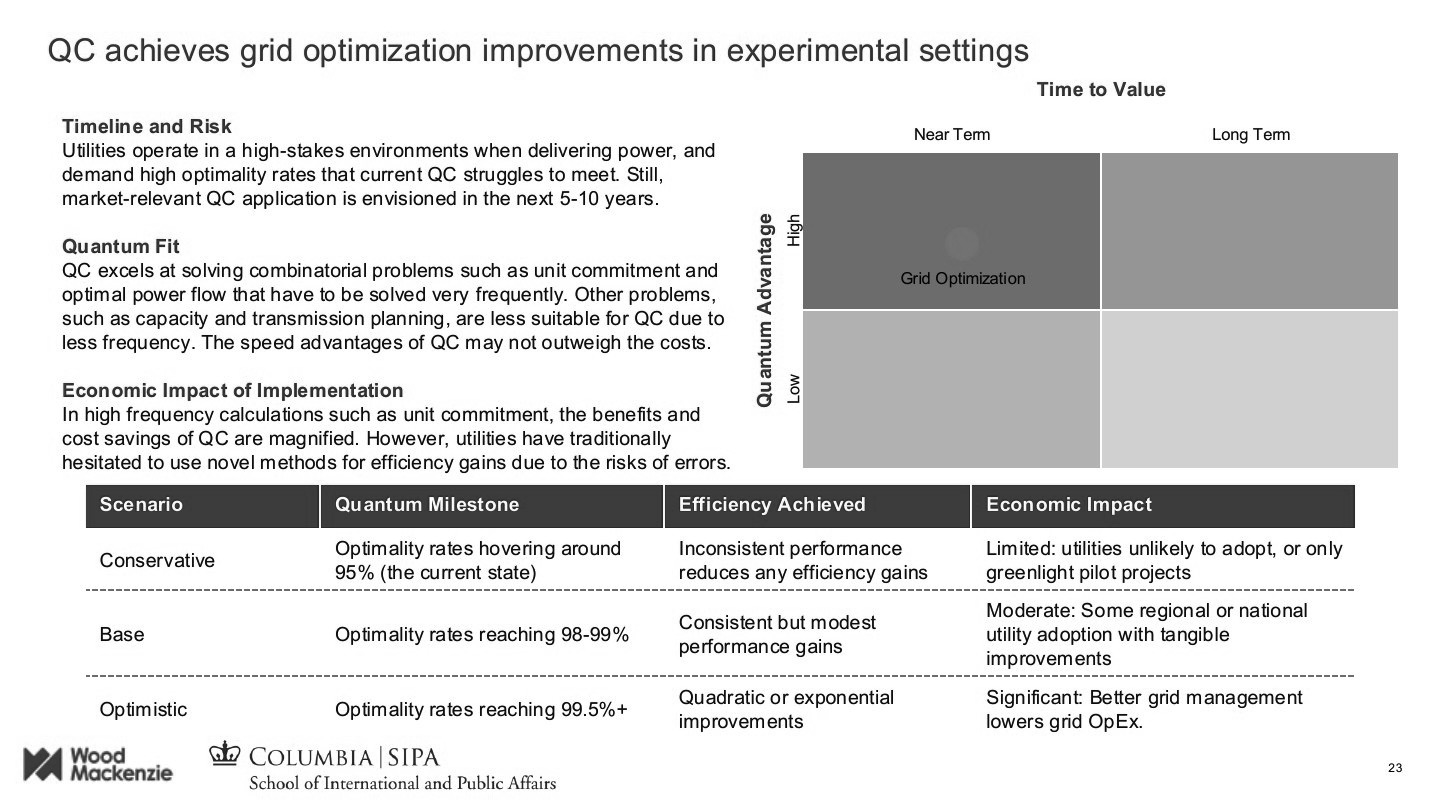
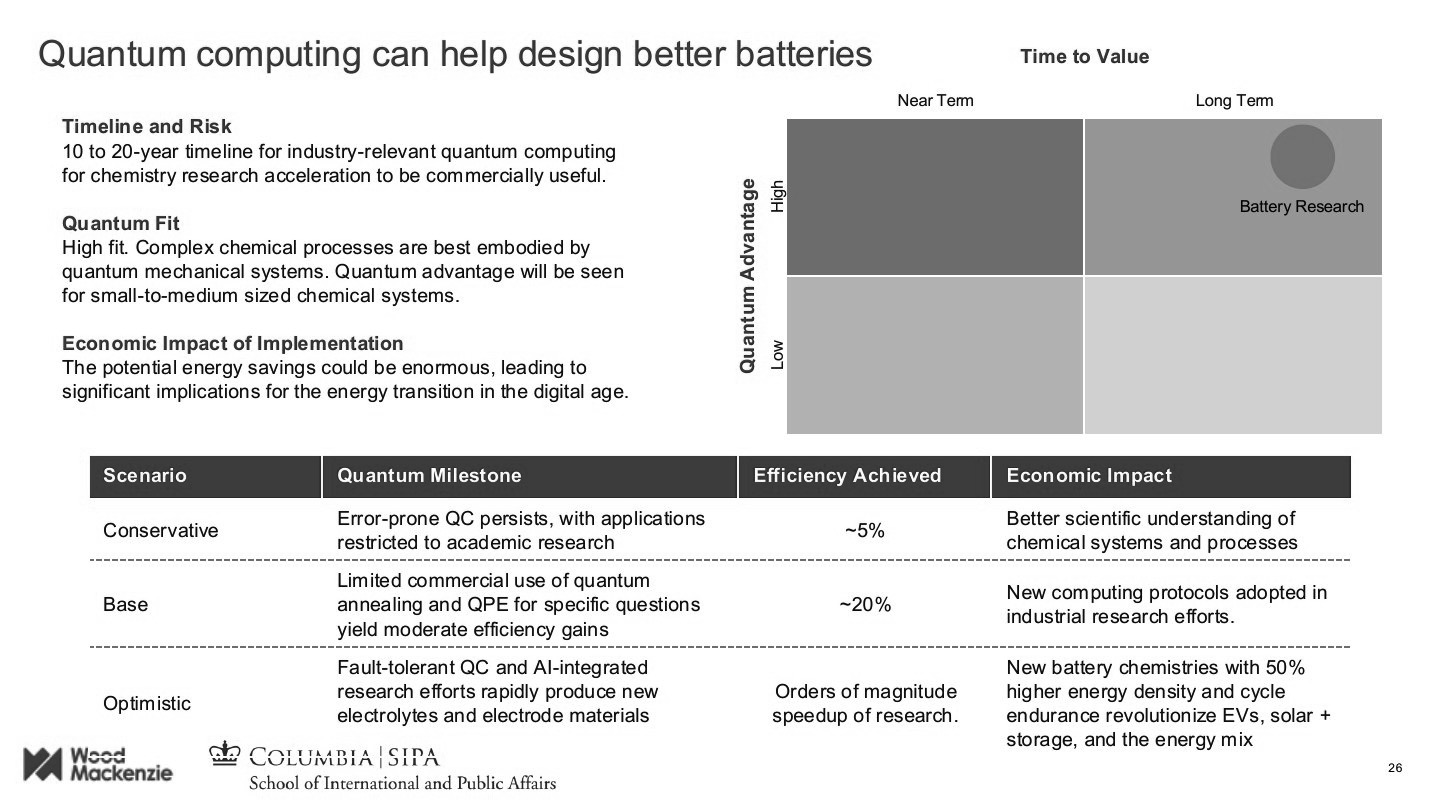
- Time to value. When might hardware reach the scale and error rates the application requires?
- Quantum fit. Does the mathematical structure of the problem offer a credible advantage over classical methods?
- Cost-benefit of implementation. What would hardware access, integration, specialist software, and organizational change cost relative to the benefit?
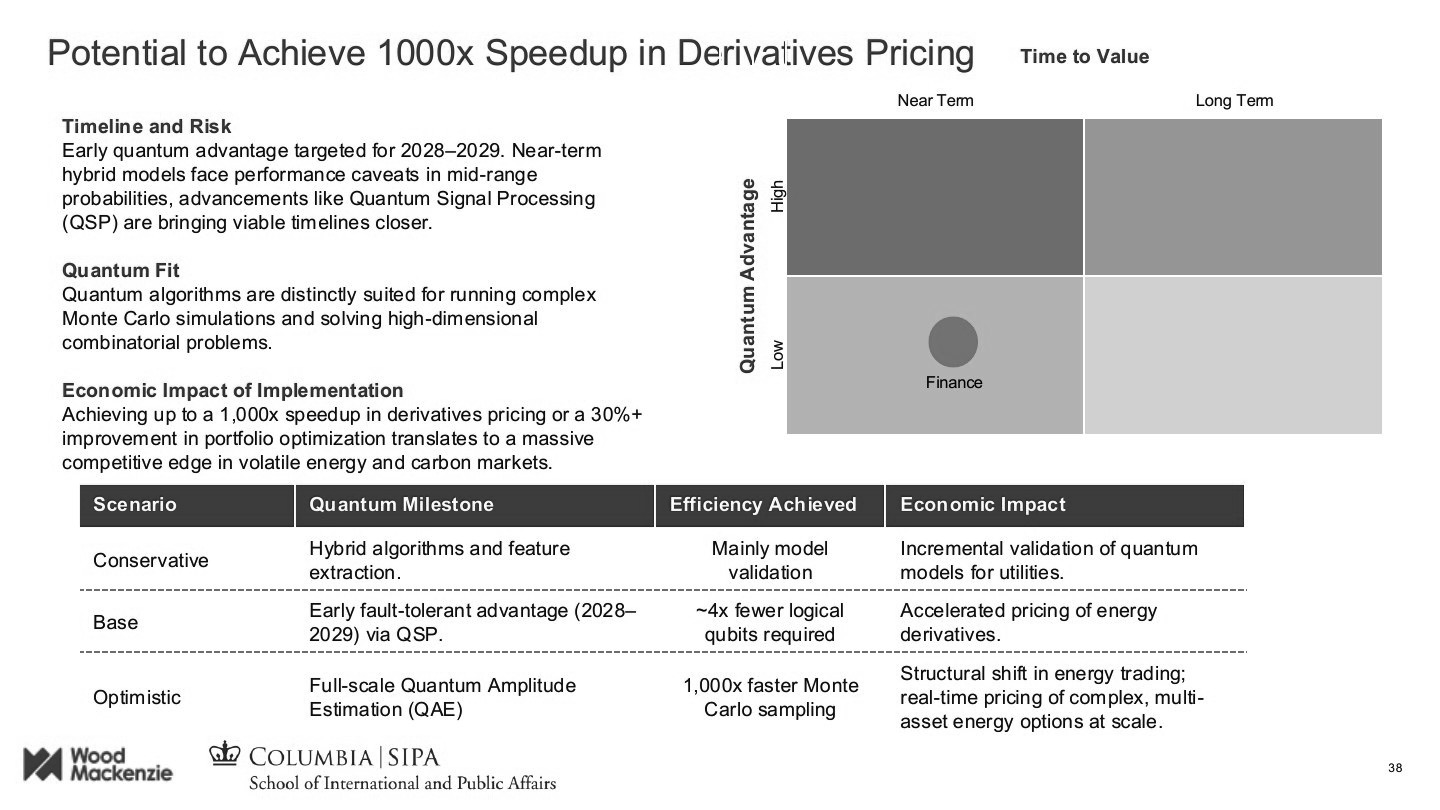
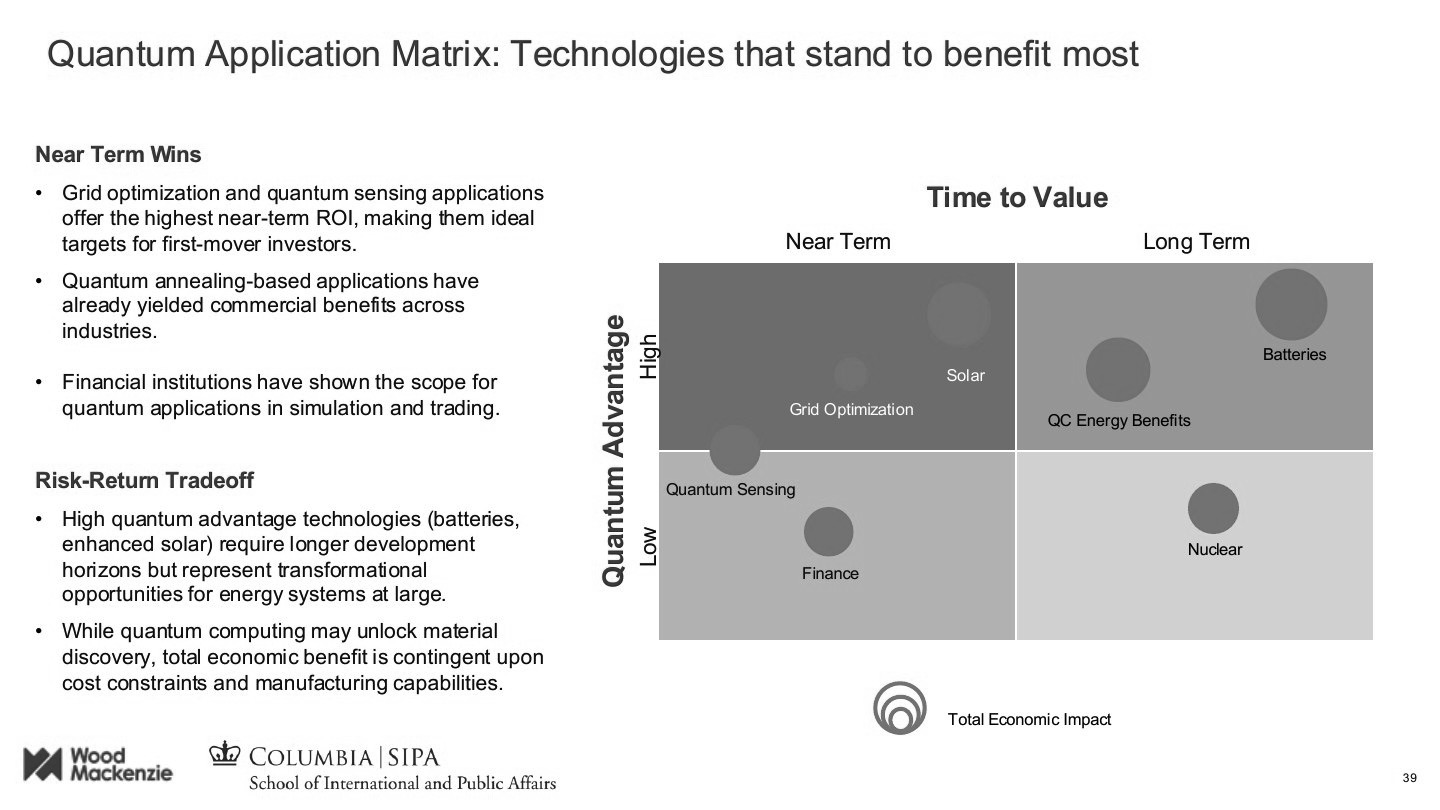
The matrix mattered more than any score inside it. It let us compare applications with very different technical maturity and economics, and it brought disagreements into view instead of burying them under a headline forecast.
Six application areas
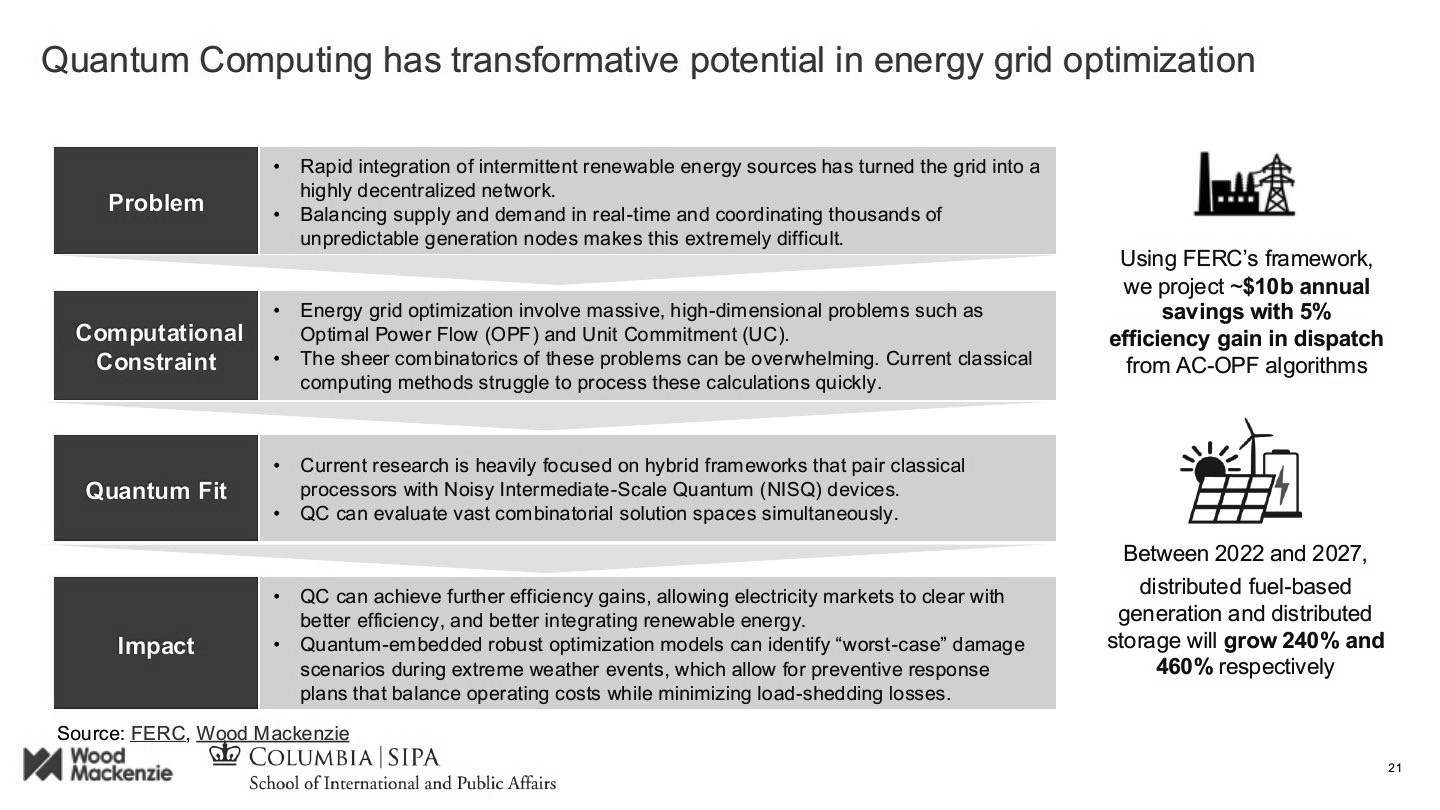
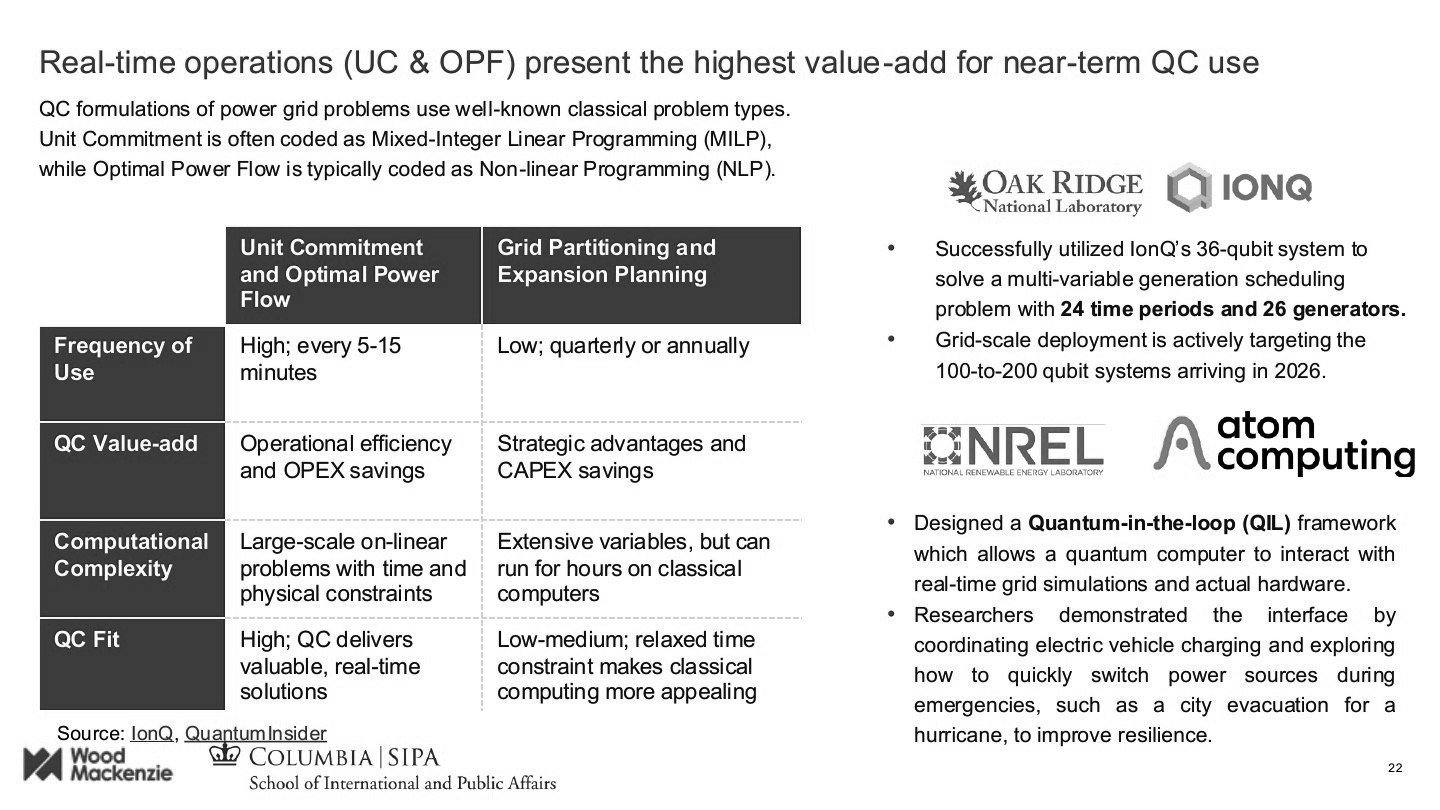
Grid optimization. Unit commitment and other combinatorial scheduling problems offer a plausible hybrid use case. The economic case depends on whether a quantum-assisted method can improve enough on already capable classical solvers, often enough, to justify integration.
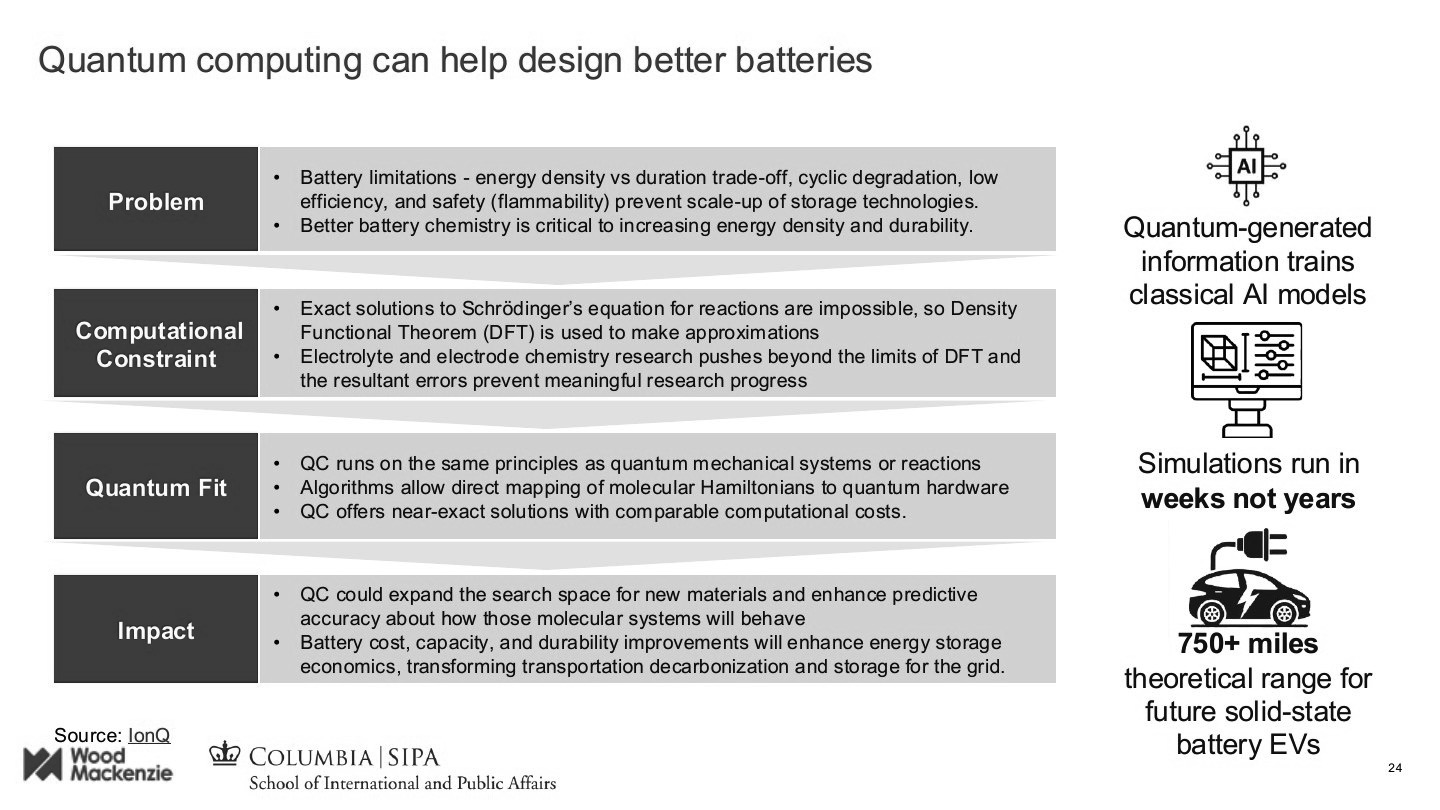
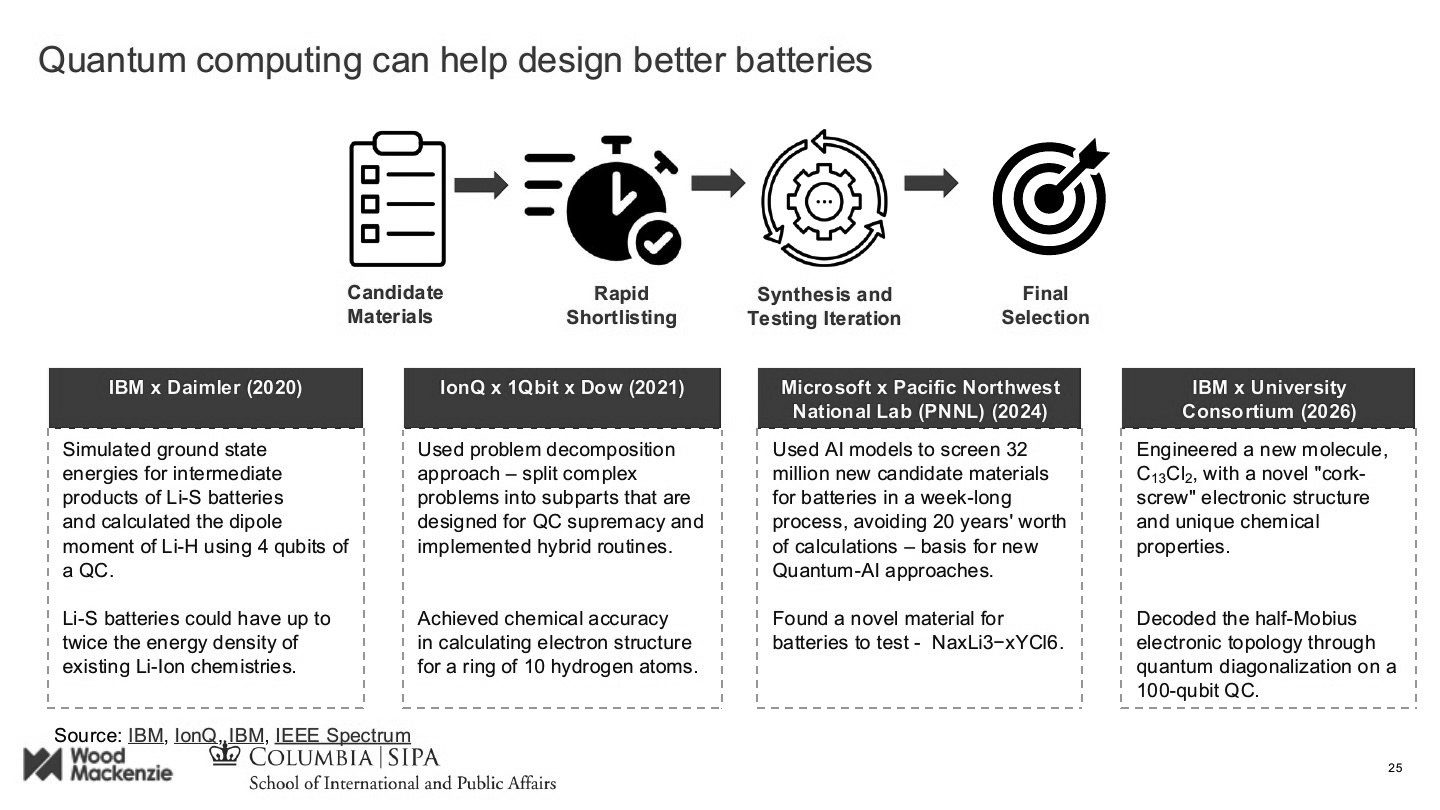
Battery chemistry. Quantum simulation maps naturally to molecular electronic structure. The potential value is large, but practical materials discovery depends on hardware quality, usable algorithms, and end-to-end workflow gains rather than a laboratory benchmark alone.
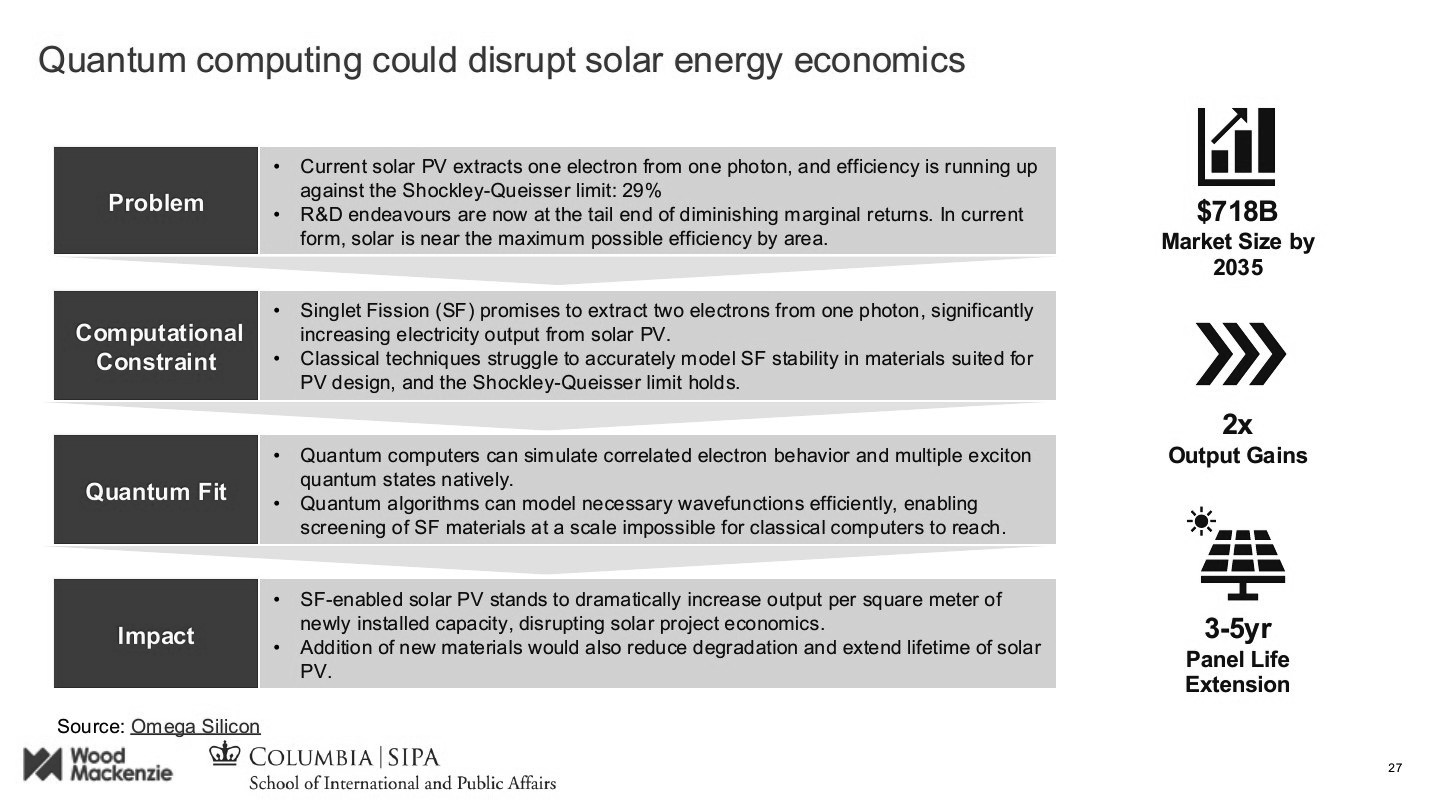
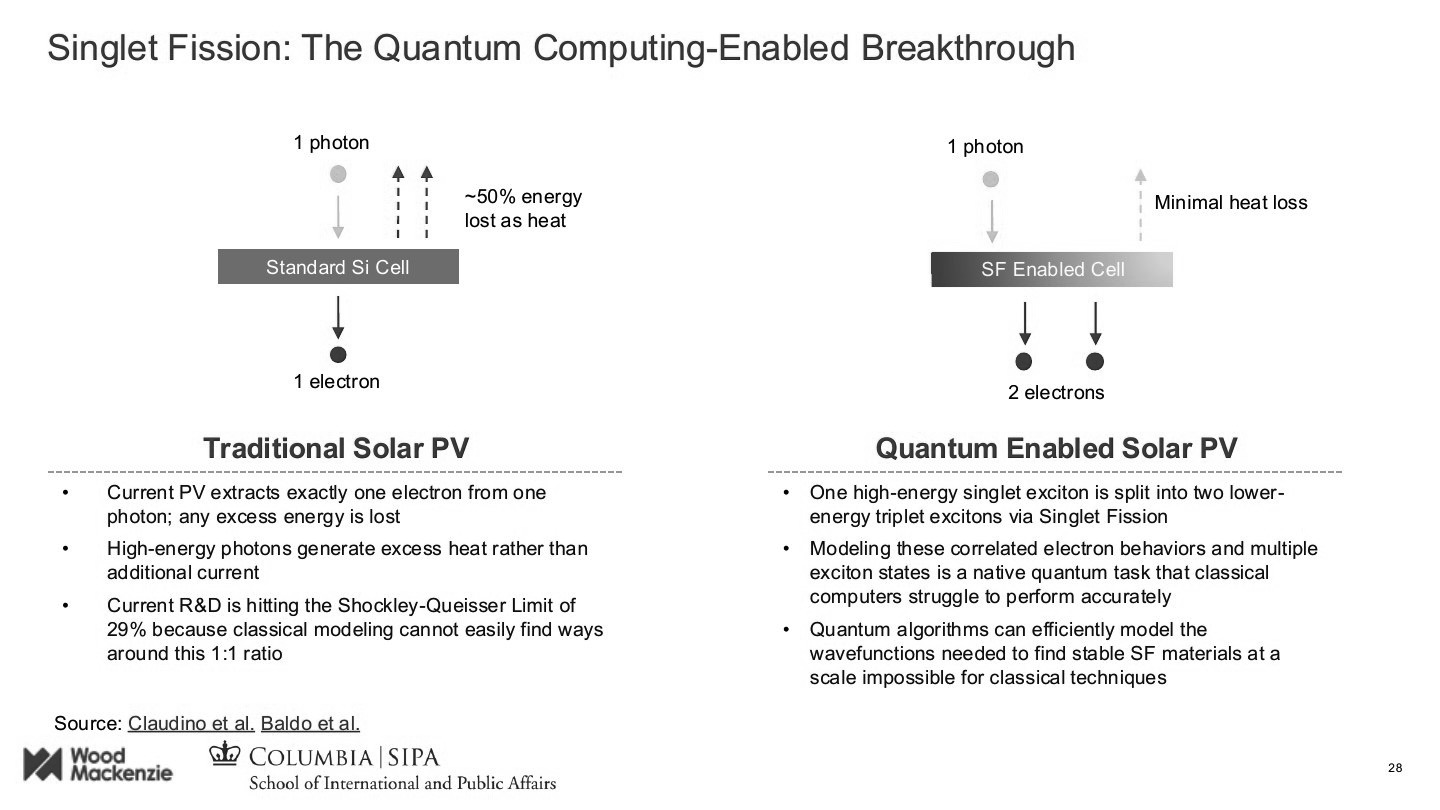
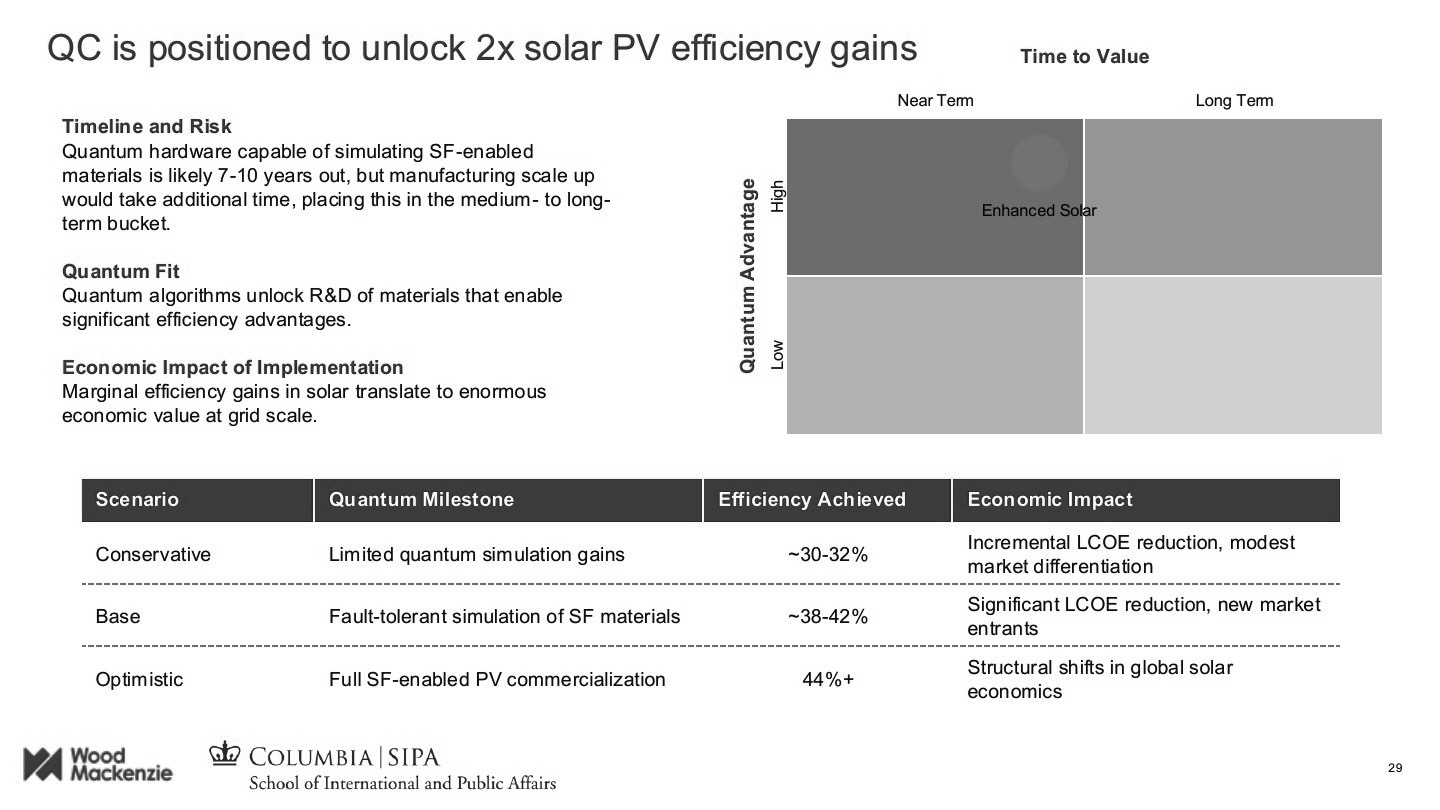
Enhanced solar. Singlet-fission materials illustrate the gap between technical fit and commercial timing. Better simulation could support materials research, while manufacturing, stability, and scale still determine whether a discovery changes project economics.
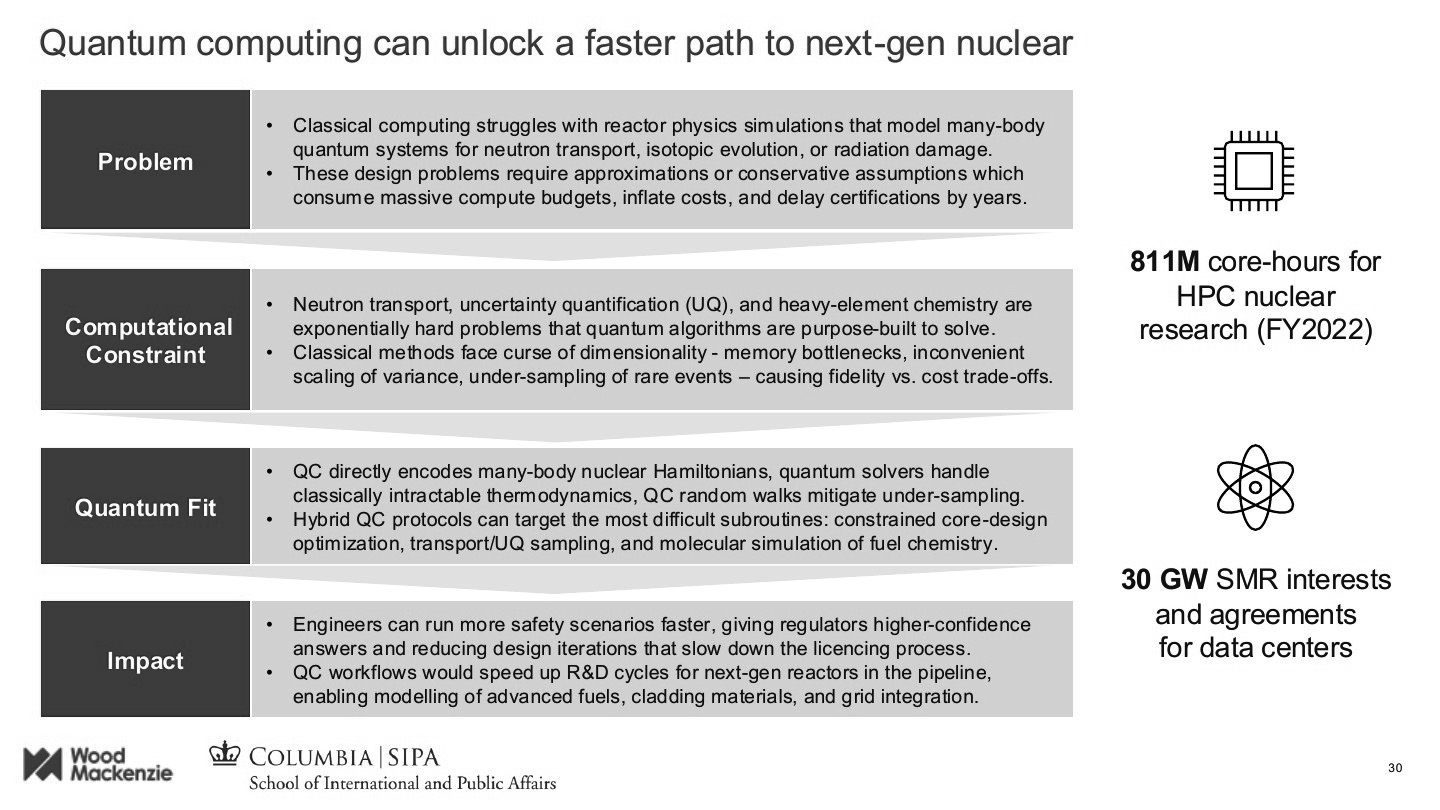
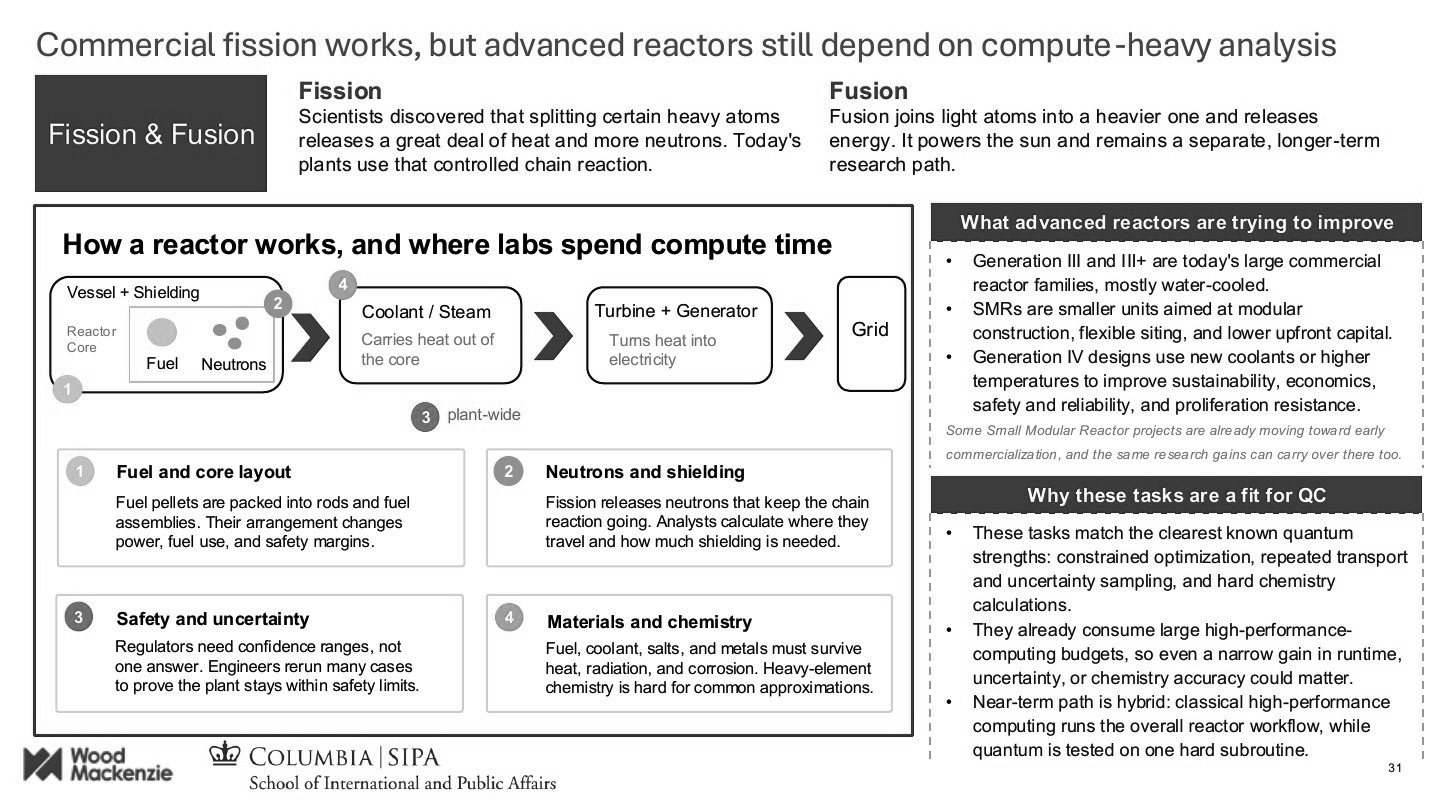
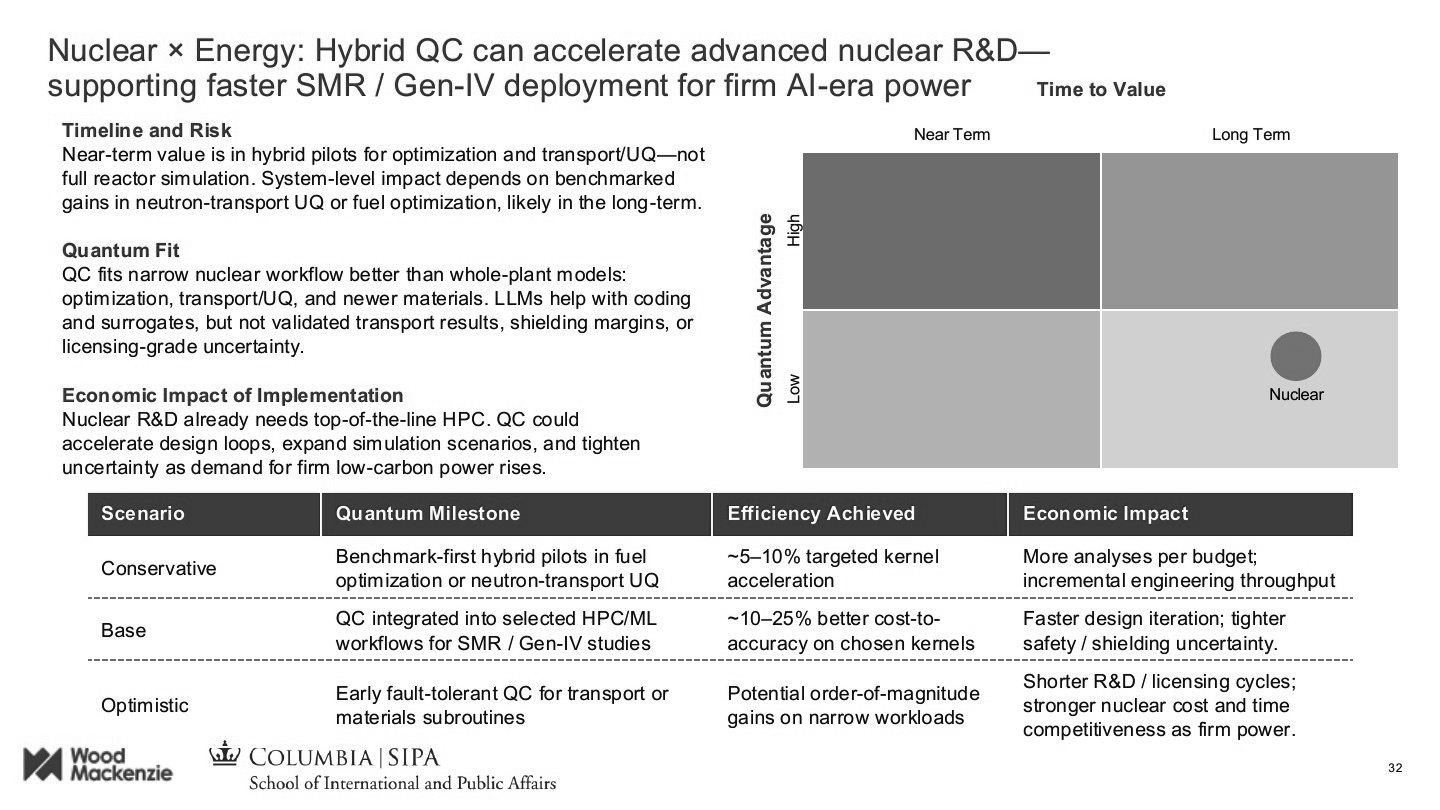
Nuclear research. The credible case is acceleration of selected computational kernels inside an existing high-performance-computing workflow. Fuel optimization, uncertainty analysis, and electronic-structure calculations are different problems and should not be collapsed into a claim that quantum computing replaces HPC.
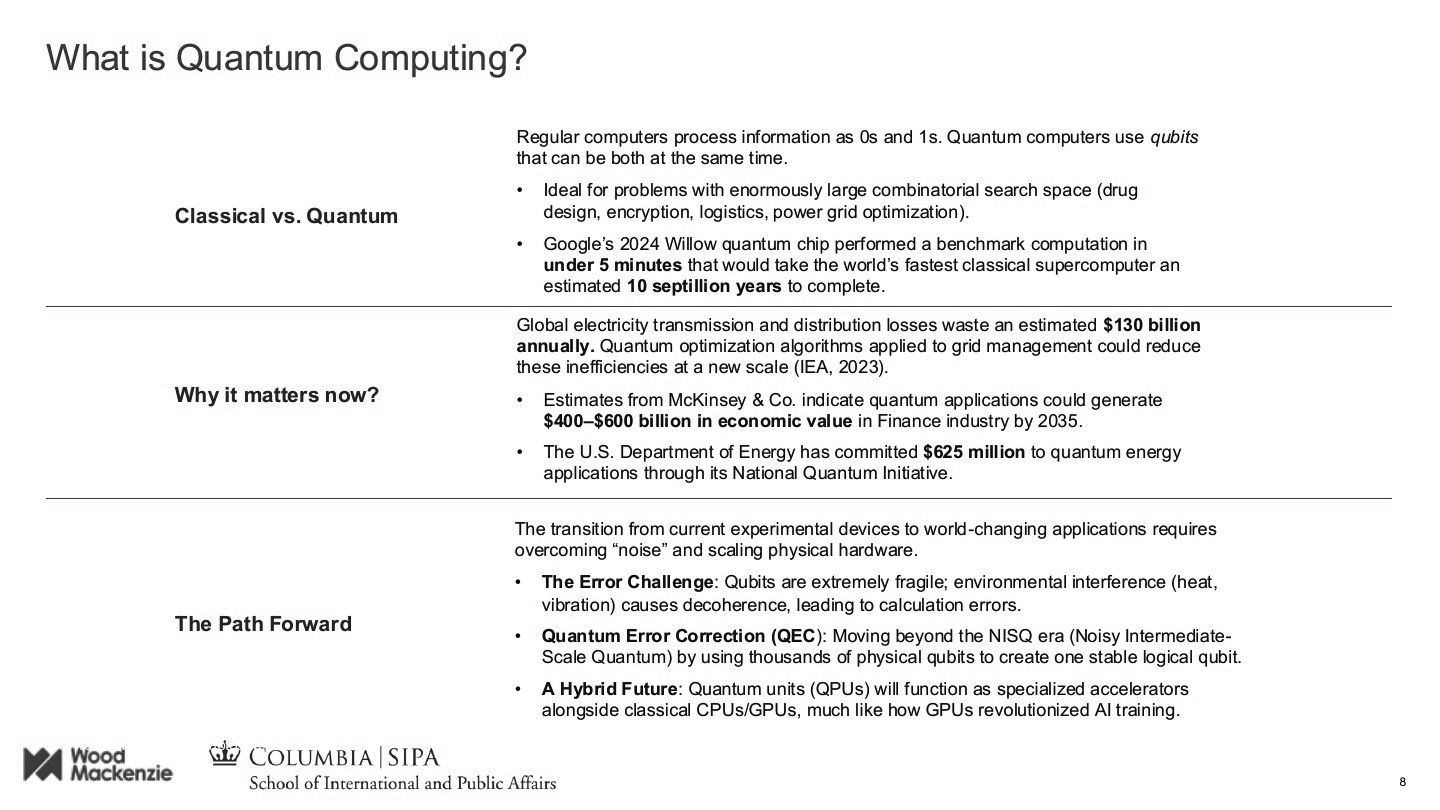
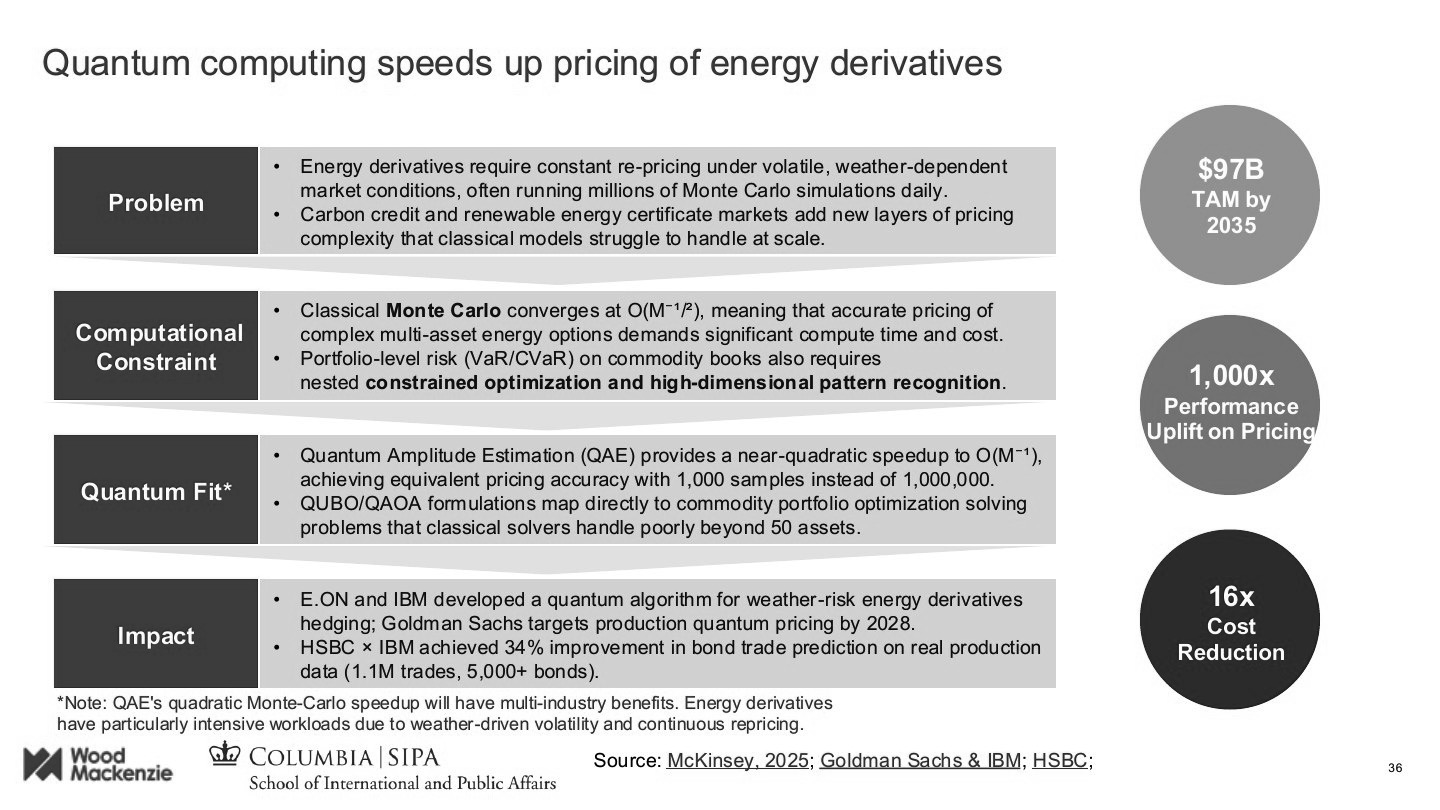
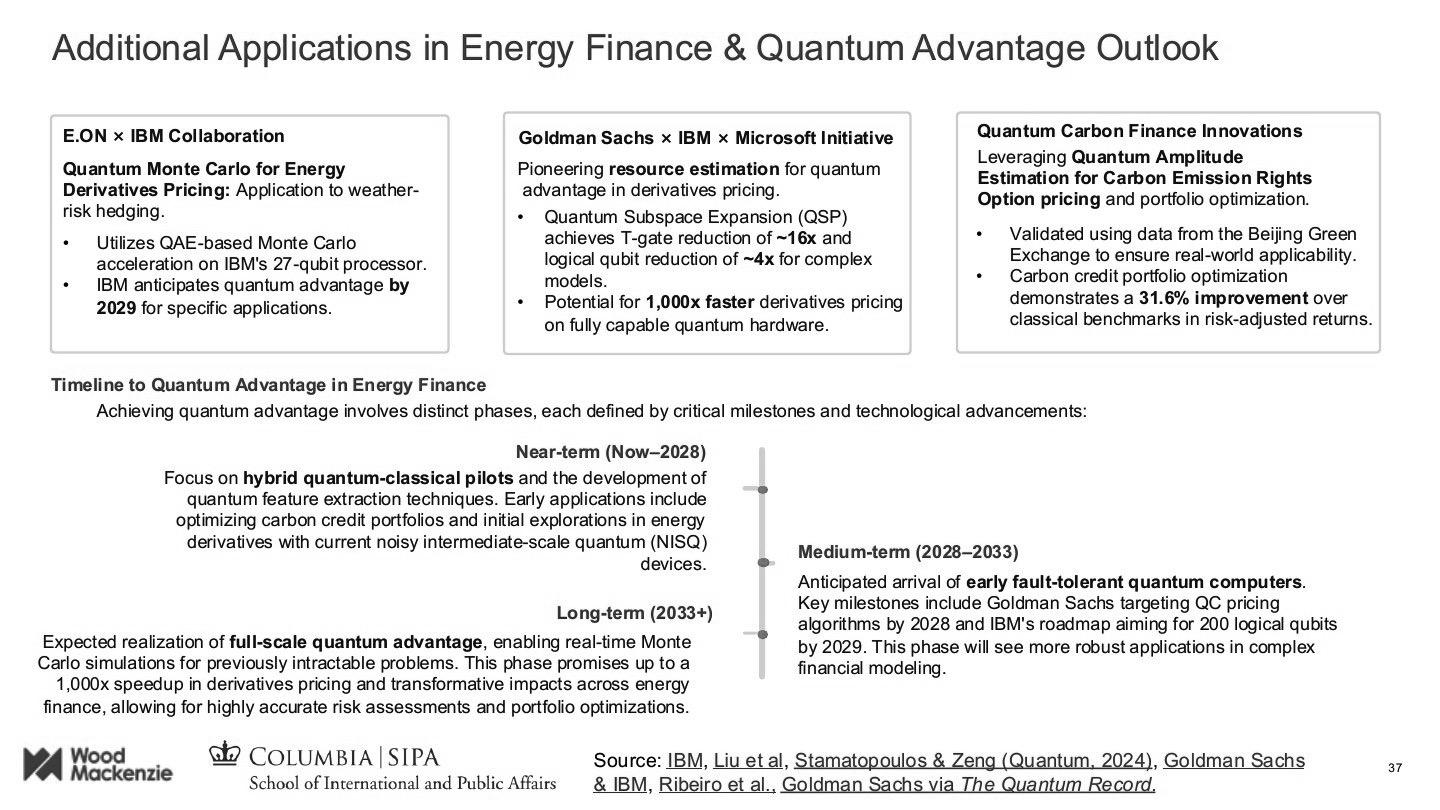
Energy finance. Quantum amplitude estimation is relevant to Monte Carlo-heavy tasks such as derivatives pricing and risk measurement. Its theoretical sample advantage is interesting, but a useful comparison has to include data loading, error correction, classical alternatives, and the cost of operating the full workflow.
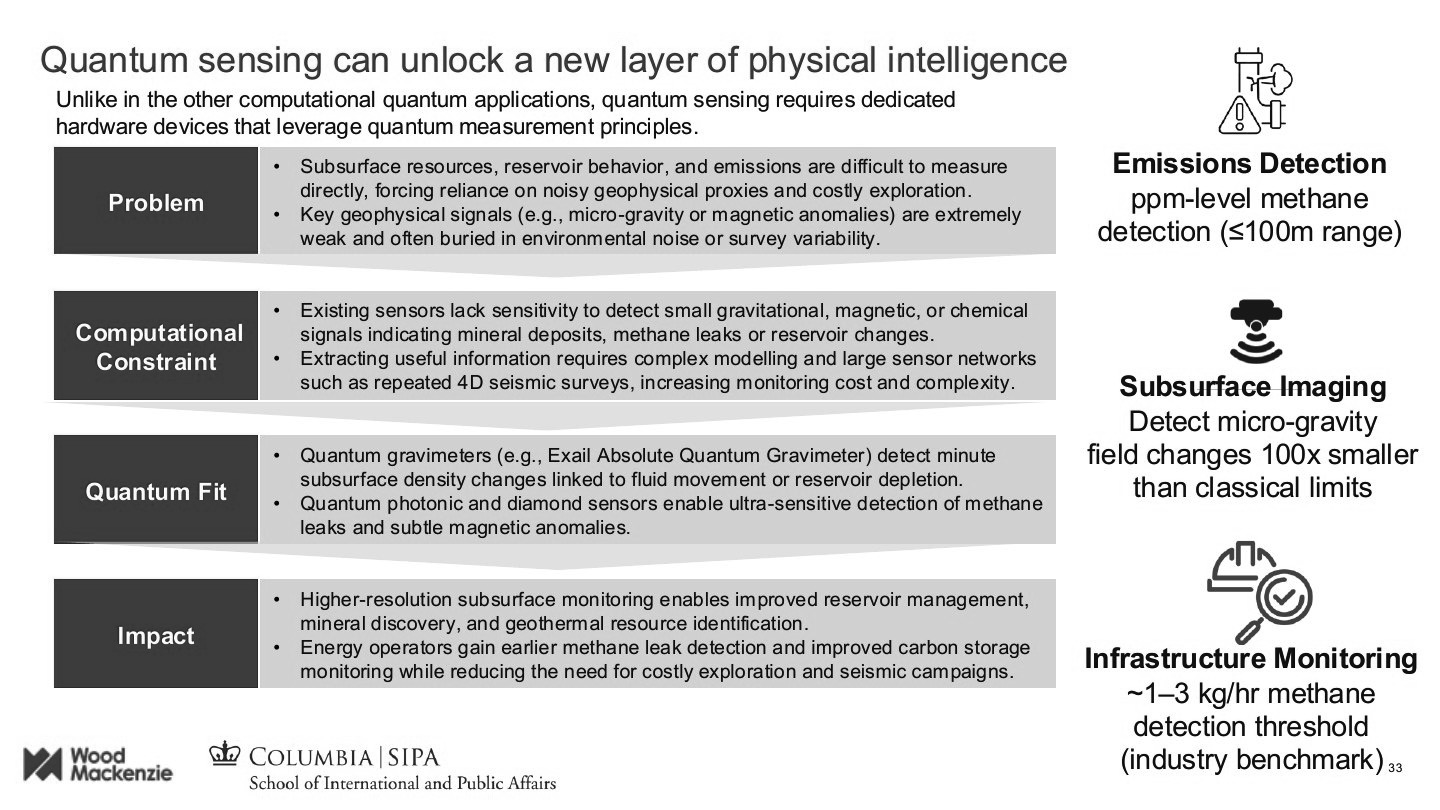
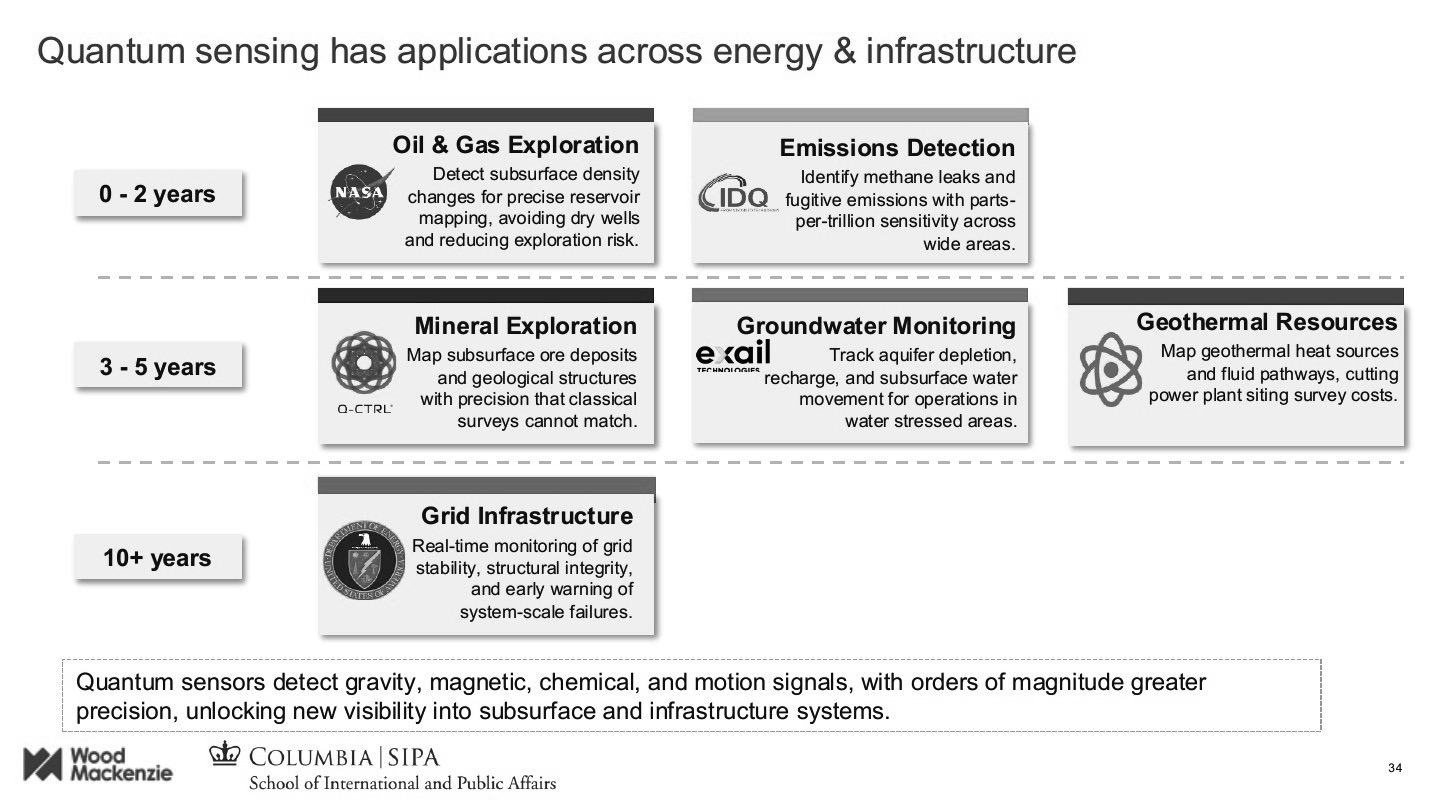
Quantum sensing. Sensing belongs on a different maturity curve from quantum computing. Magnetometry, interferometry, and gravity measurement can matter for subsurface characterization, infrastructure monitoring, and other physical measurements without waiting for a fault-tolerant computer.
What held across the cases
Four findings survived the comparison:
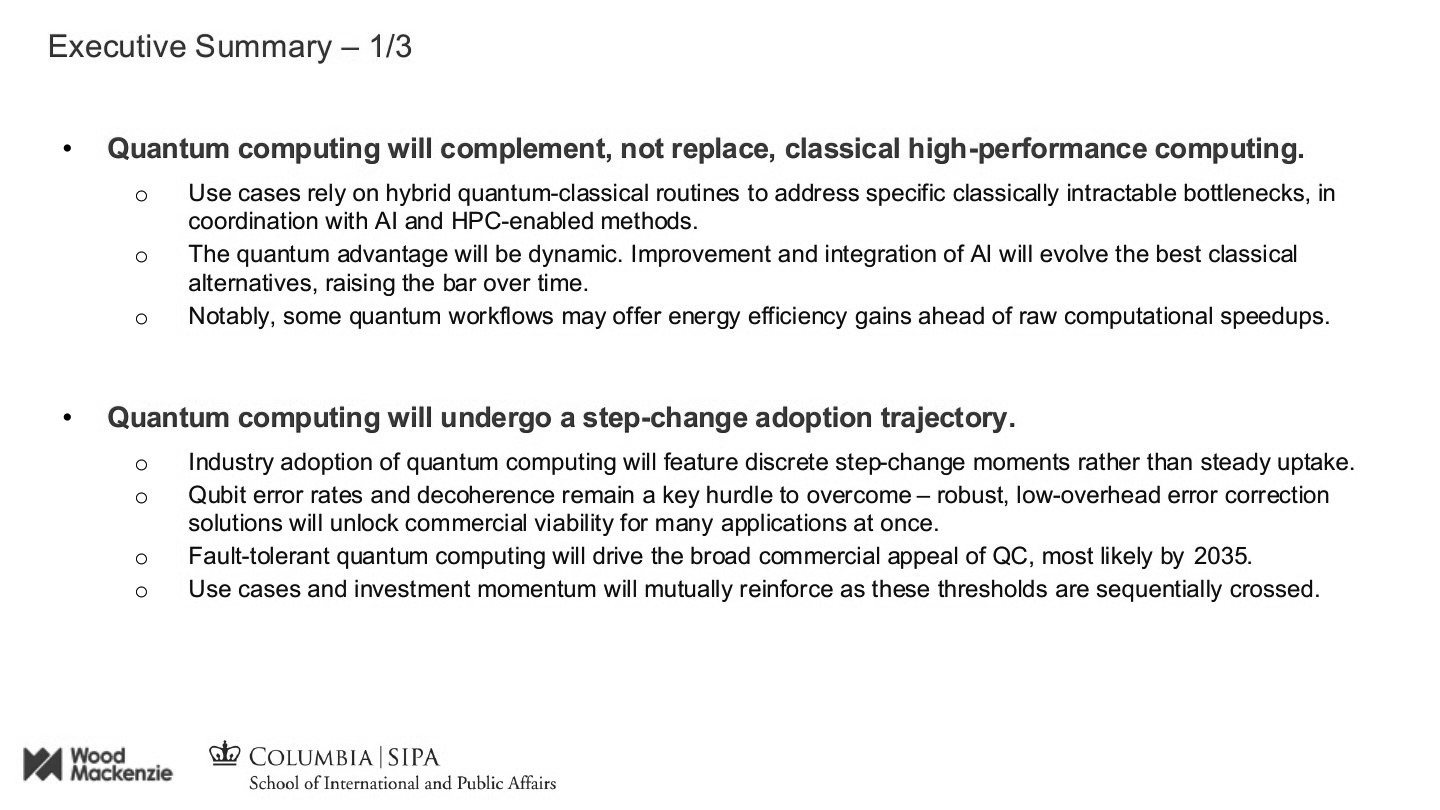
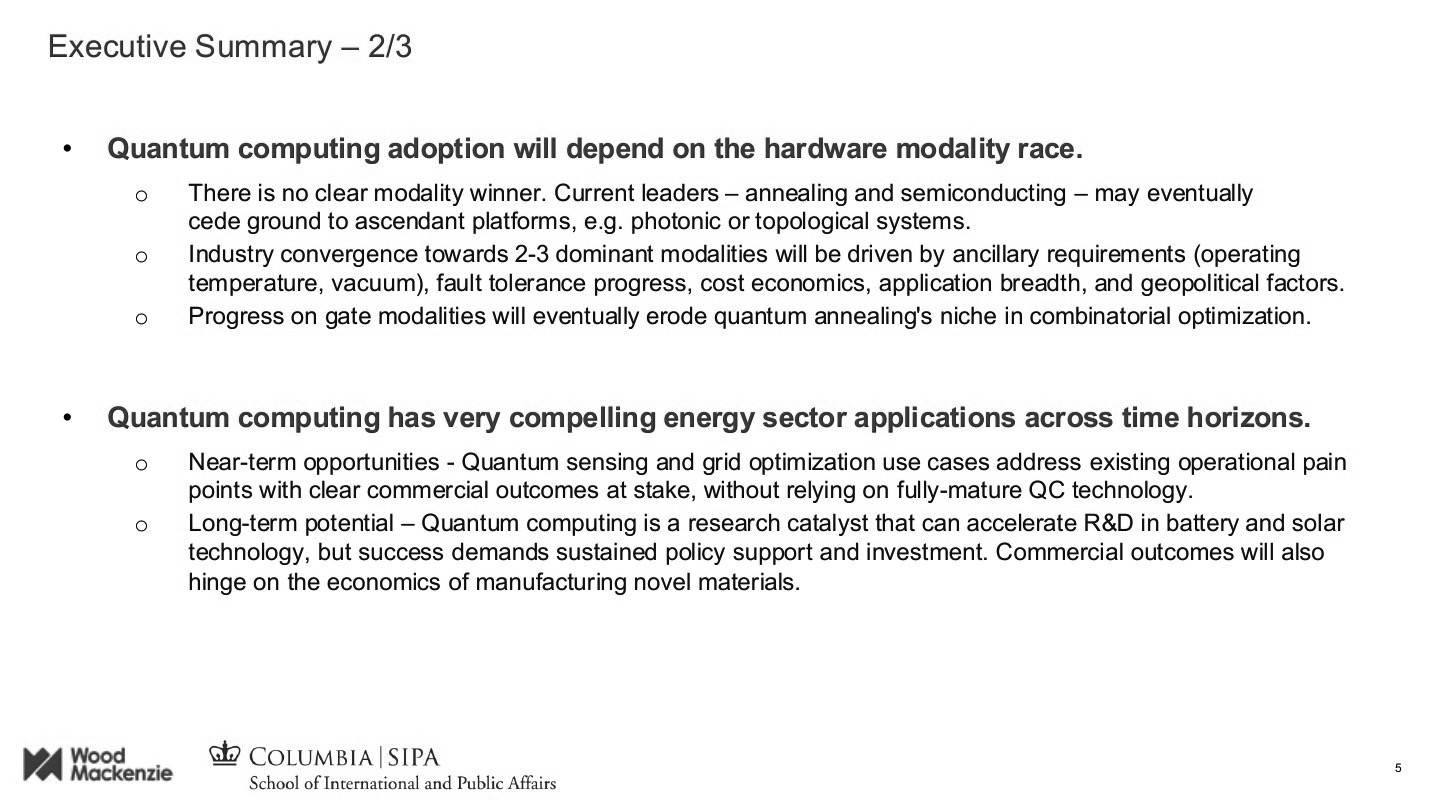
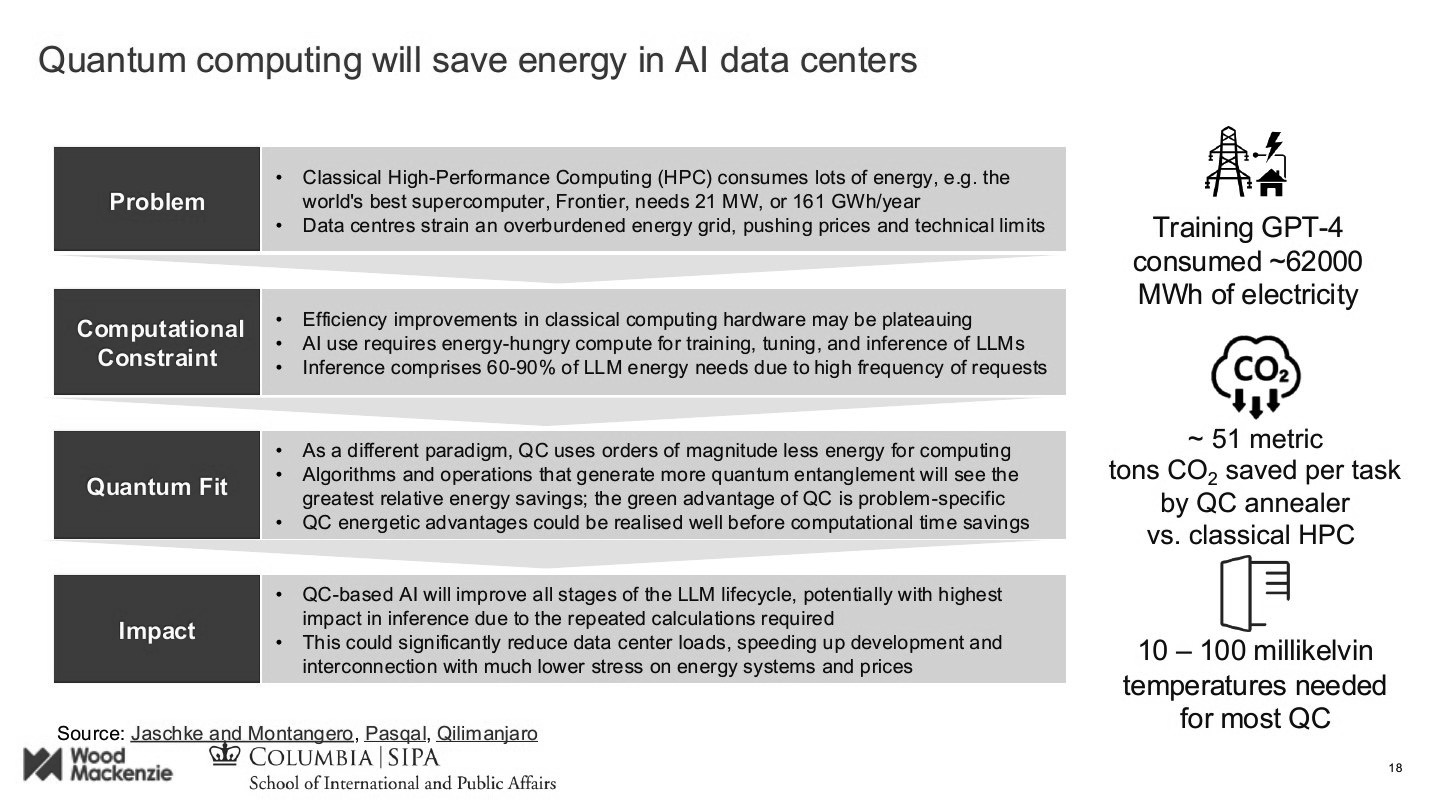
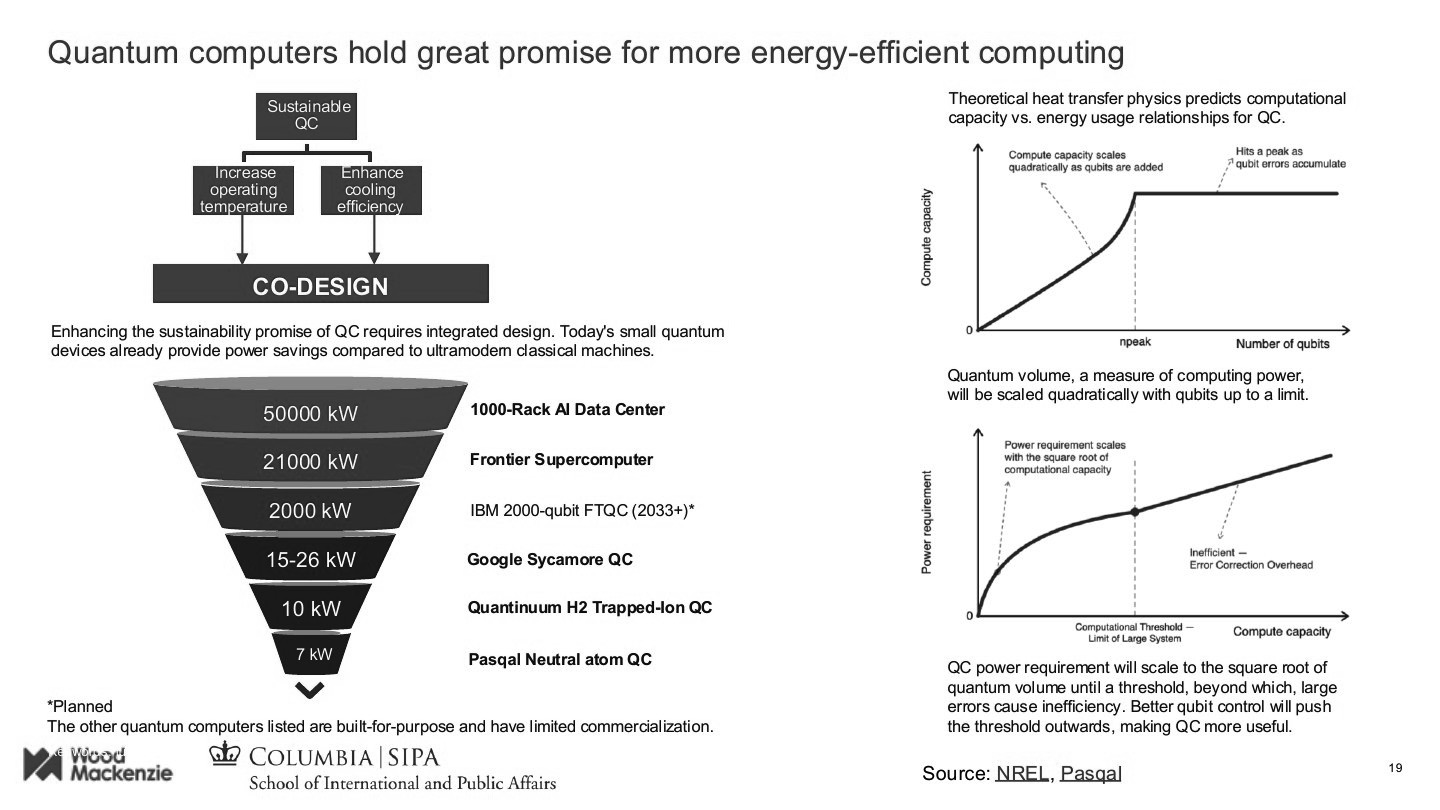
- Hardware accuracy and error correction constrain timing more than raw qubit counts.
- Technical fit and economic benefit are separate questions.
- Credible early deployments are likely to combine quantum and classical systems.
- Value can remain flat until a capability threshold is crossed, so planning around a smooth adoption curve is risky.
Method
The team reviewed public technical and industry literature, developed an Excel scoring framework, interviewed practitioners, and tested the analysis through interim and final presentations. Each application was assessed with the same core questions, then reviewed for assumptions that did not travel cleanly across sectors.
I learned to read a technology forecast as a chain of claims. A technical advantage must survive implementation, operating constraints, and economics before it becomes useful to an energy company or investor. The matrix mattered because it forced every application to travel the whole chain.
The deck
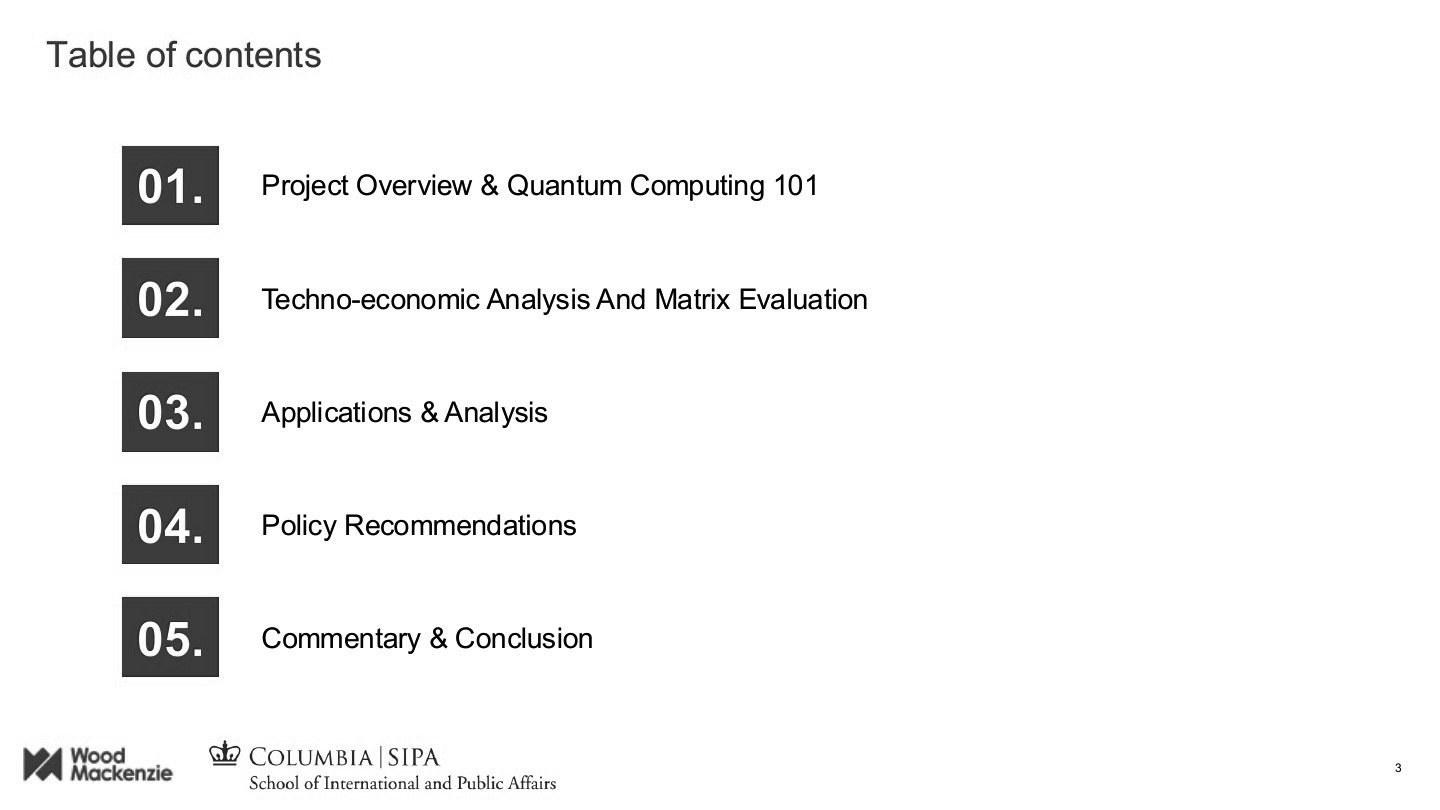
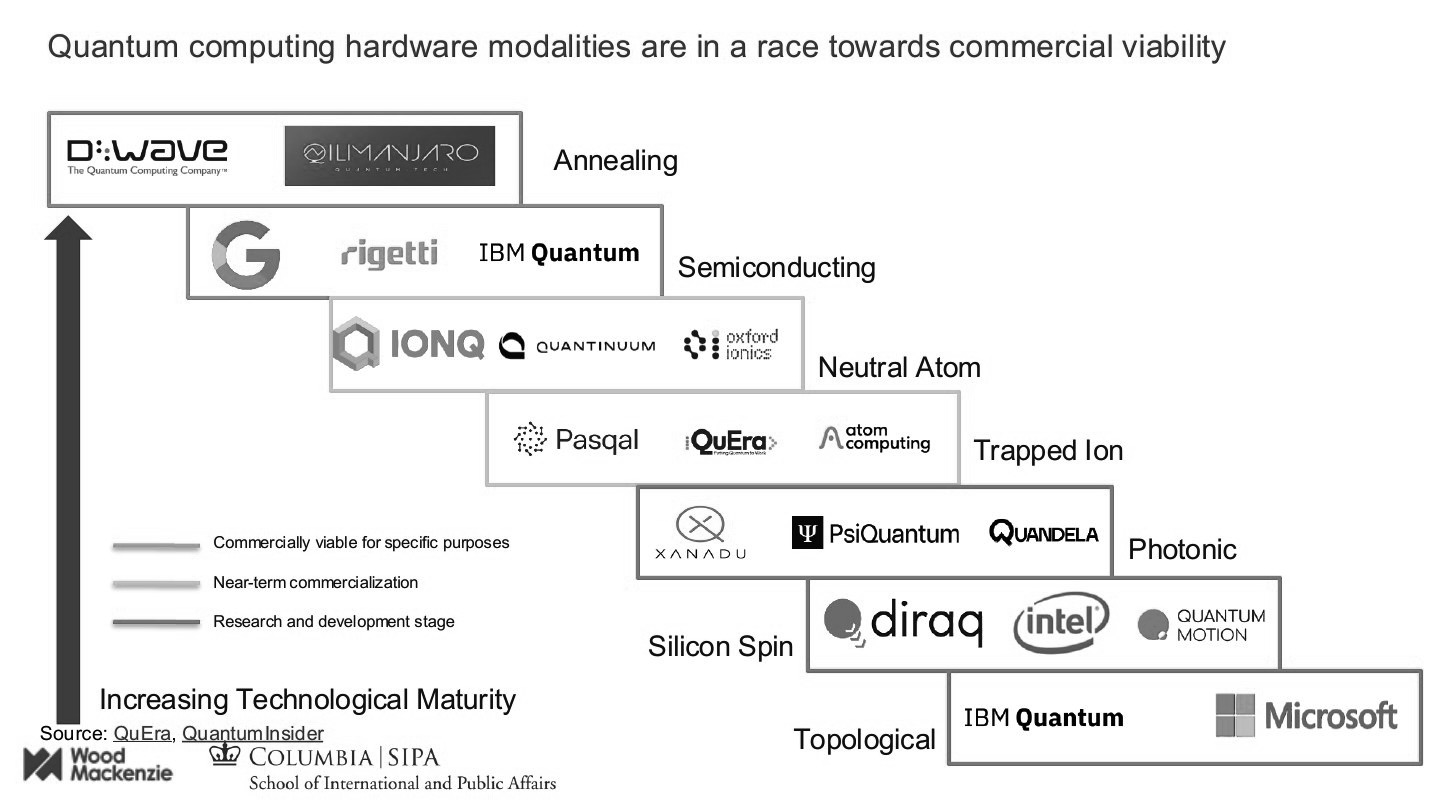
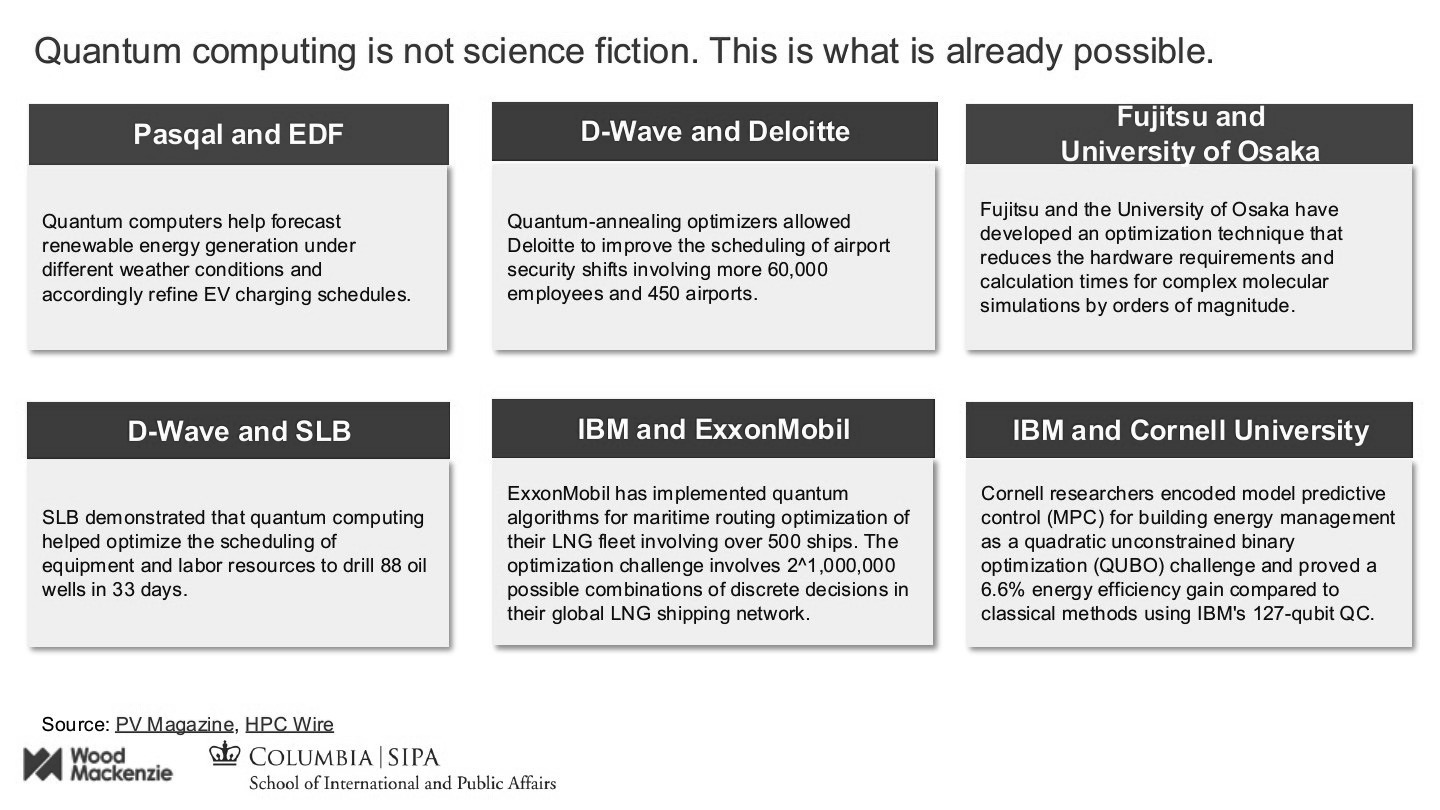
The final presentation appears below as a 43-slide black-and-white contact sheet, with email addresses removed.
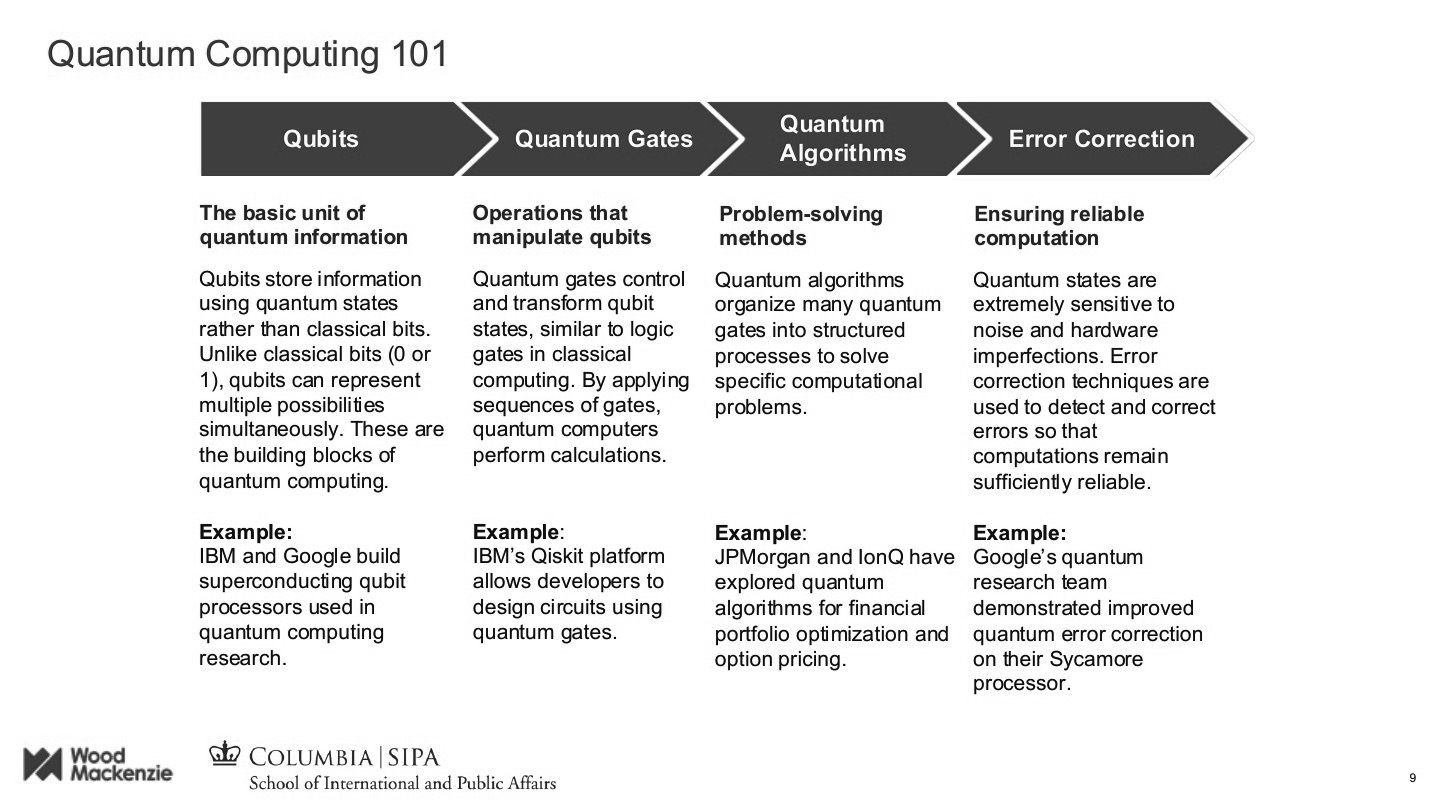
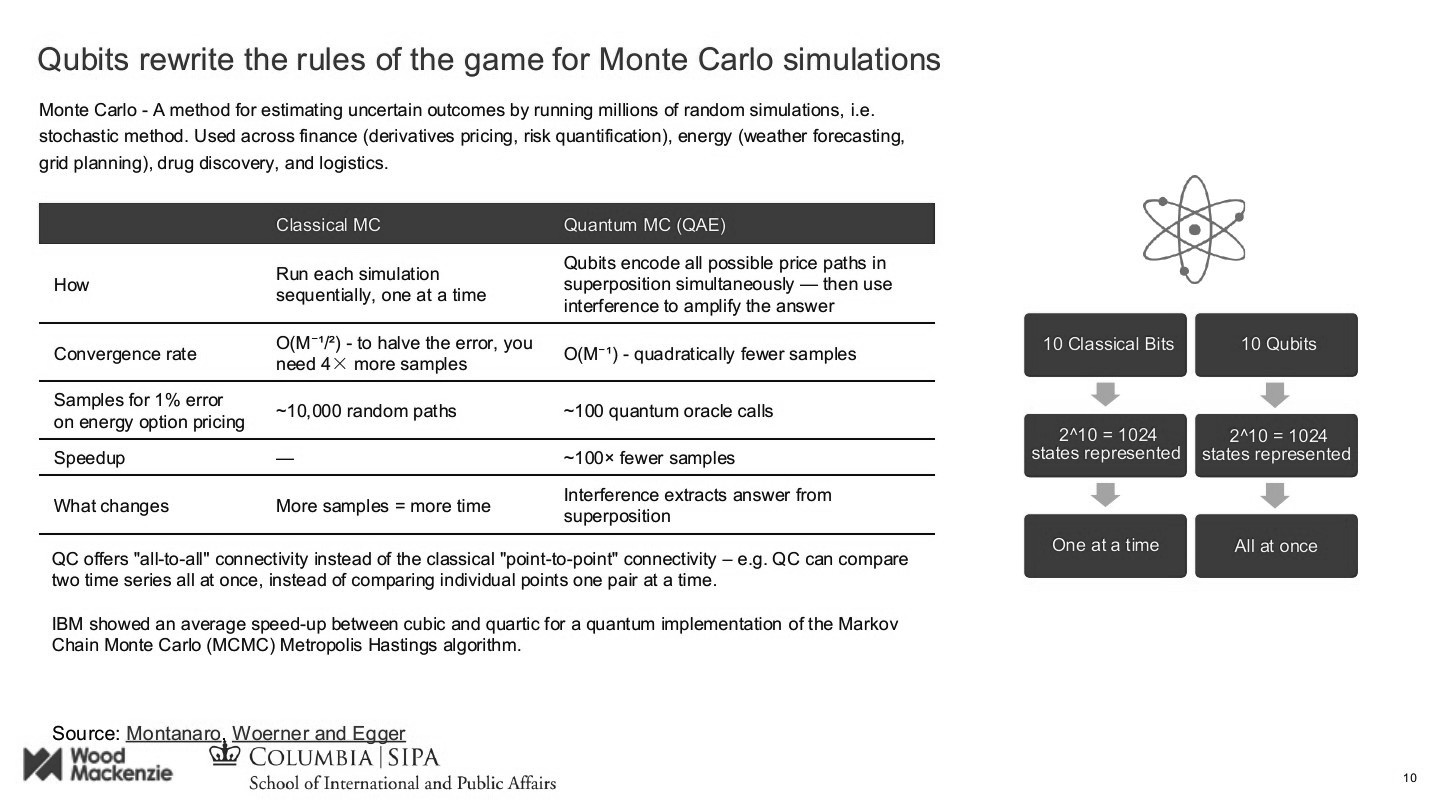
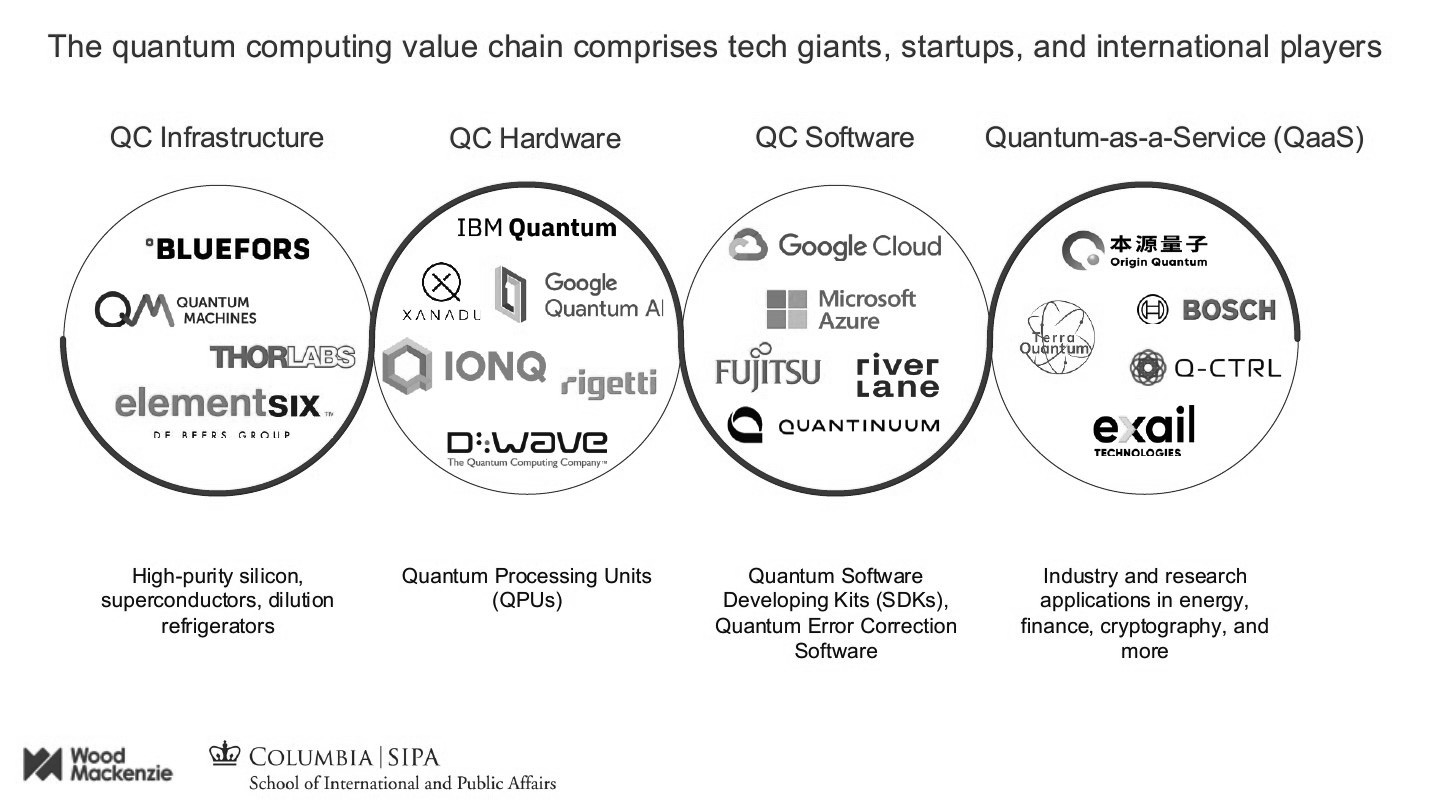
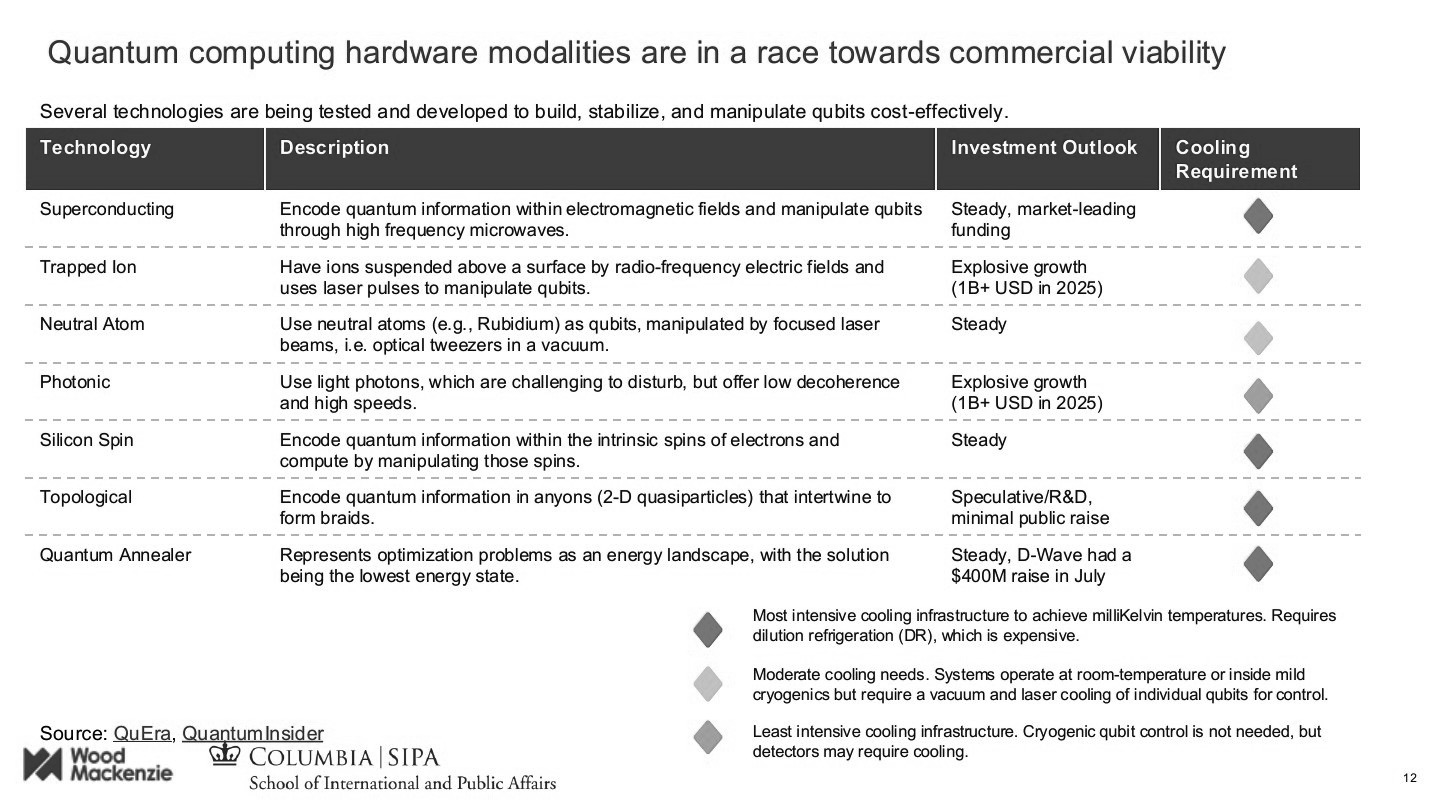
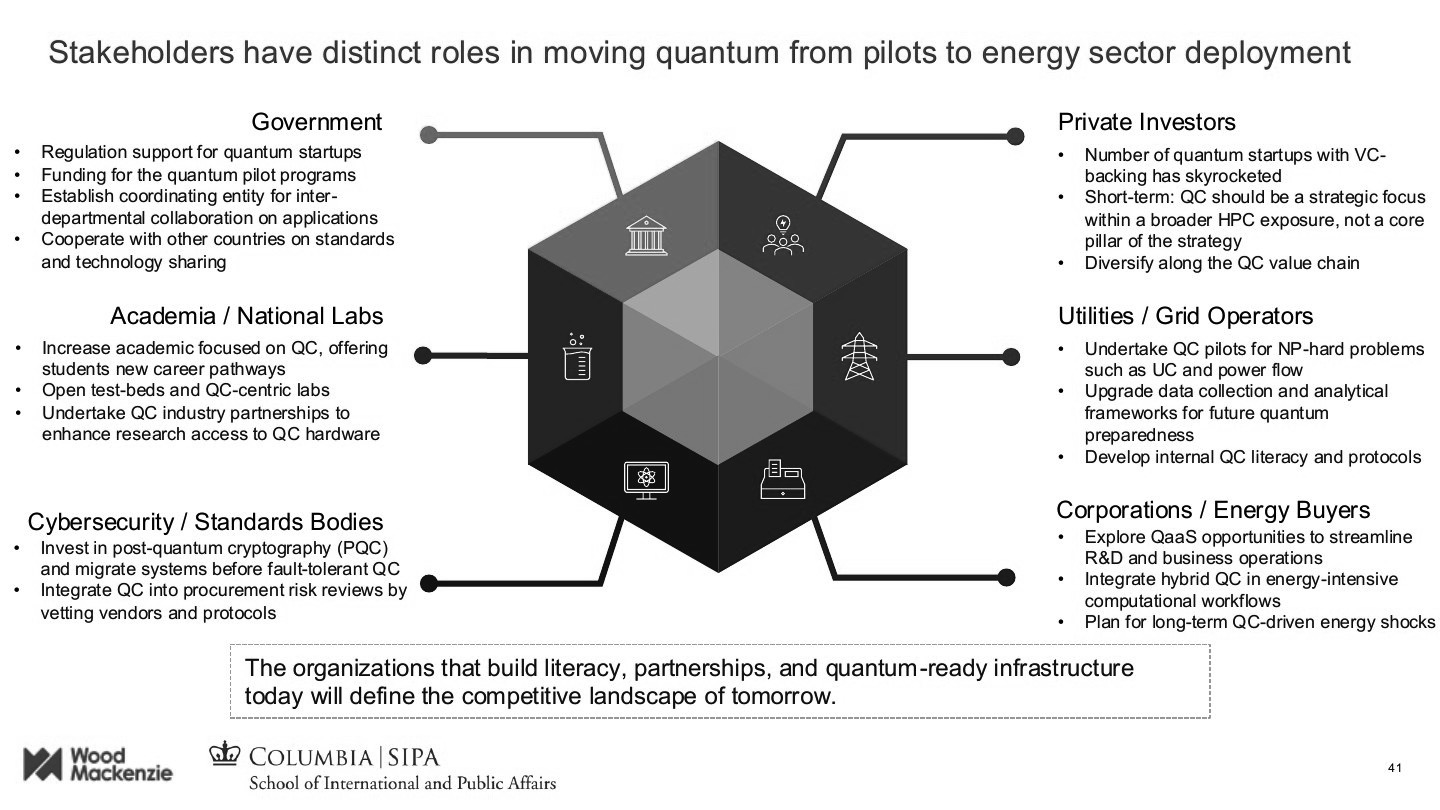
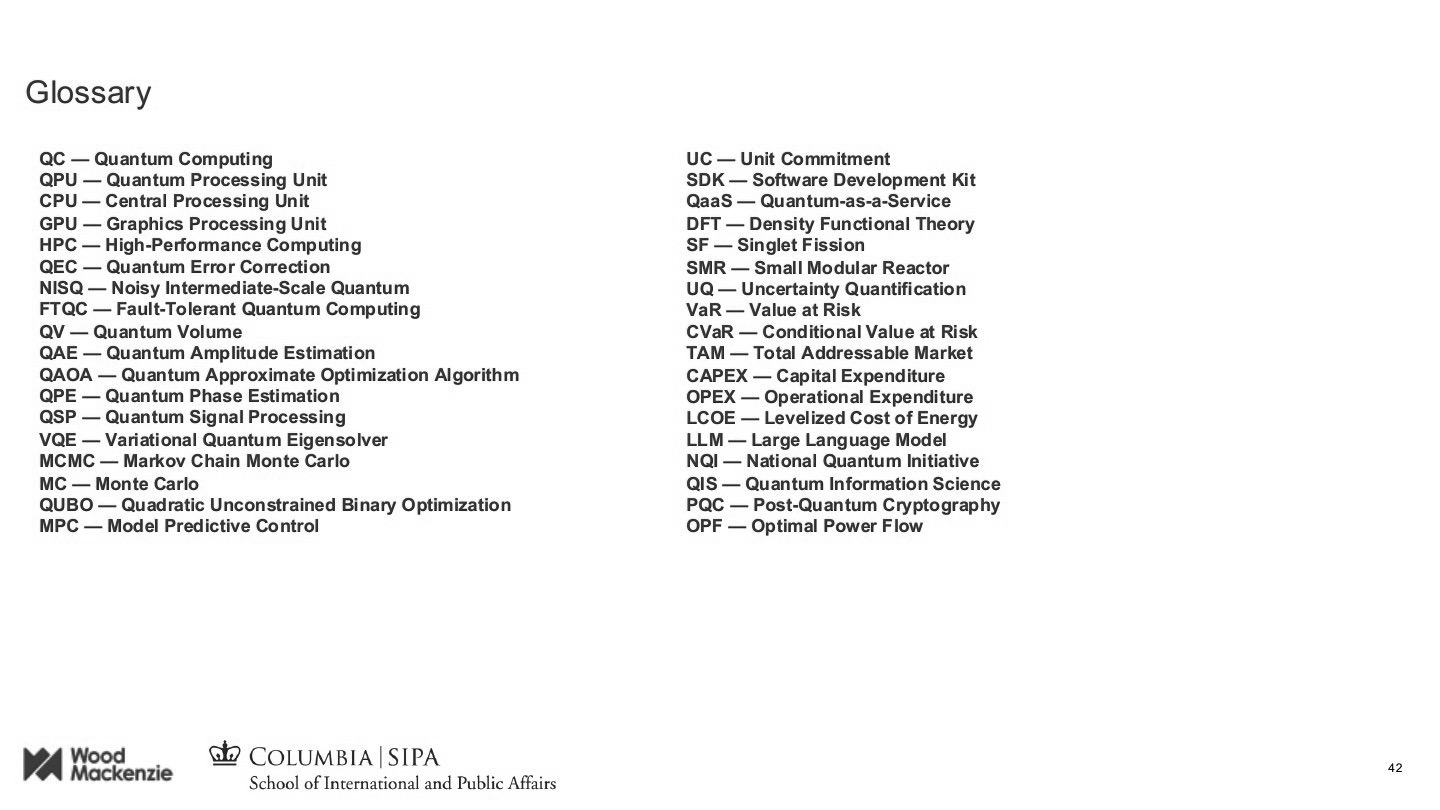
The presentation is shared for academic and portfolio purposes. Credit belongs to the full team; redistribution or republication is not permitted.
Scope
This is an academic portfolio account based on the team's work and public-source research available through April 2026. It is not investment, financial, or technical advice, and it does not represent Wood Mackenzie or Columbia University. The presentation records the team’s judgments as of April 2026. Contact information and interview records remain private.